A weeknight dinner usually goes sideways before the burner turns on. The cutting board is too small, the garlic is still in its papery skin, the oil is across the kitchen, and a recipe is asking for two steps at once. To organize kitchen mise en place is to remove that friction before heat, timing, and cleanup start competing for your attention.
This is not about turning a home kitchen into a restaurant line. It is about borrowing the parts of professional prep that protect your time: a defined work zone, ingredients staged in the order they are used, and a reset system that prevents tomorrow’s dinner from inheriting today’s mess. Done well, mise en place makes cooking feel less like multitasking and more like execution.
Build a Mise en Place Station, Not a Pile of Bowls
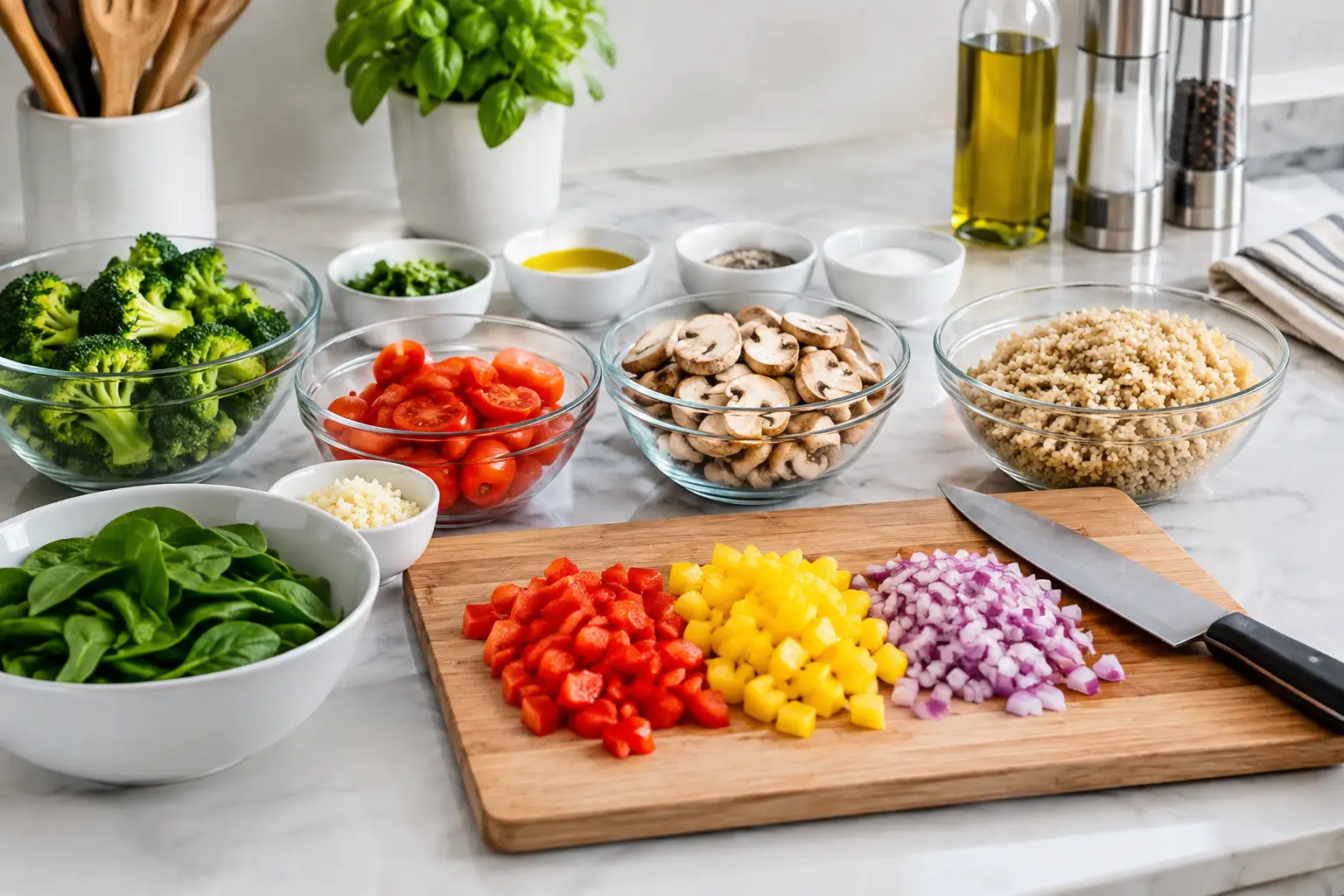
The common home-cook version of mise en place is overcorrection: every ingredient is measured into its own tiny bowl, filling half the dishwasher before the pan gets hot. That works for a pastry project or a complicated dinner party recipe. For most meals, it is wasteful.
A better system starts with one primary prep station. Place a stable cutting board near the sink and within one step of the stove. Keep a chef’s knife, bench scraper, kitchen towel, and a small scrap bowl there. The scrap bowl matters more than it sounds. Onion skins, pepper stems, and garlic wrappers go into one contained place instead of spreading across the counter and slowing cleanup.
Use your counter in zones. The left-to-right flow for a right-handed cook should generally be unwashed ingredients, prep board, finished ingredients, then cooking zone. Reverse it if you are left-handed. The direction is less important than consistency. Your hands should not cross over raw protein, dirty produce, and finished vegetables while you work.
A large rimmed sheet pan is one of the most useful pieces of hardware in this setup. Treat it as a mobile staging surface. Put chopped vegetables, protein, sauces, and dry seasonings on it in cooking order, then carry the whole operation to the stove. It keeps the counter clear and prevents the classic failure point of leaving one critical ingredient on the other side of the kitchen.
Organize Kitchen Mise en Place by Cooking Sequence
The key distinction is this: prep order is not always cooking order. You may wash greens first, but they may be the last thing that hits the pan. Your station should reflect the sequence of the recipe, especially when a hot skillet is involved.
Start by reading the recipe once for timing, not just ingredients. Flag what must be ready before cooking begins. Aromatics, sauces, proteins, and fast-cooking vegetables generally belong in that category. A braise has more flexibility than a stir-fry. Pasta has a split workflow: the sauce components need staging, while the pasta water can begin heating before everything is fully prepped.
Group ingredients by when they enter the process. For a skillet meal, place onions and firm vegetables together, then aromatics such as garlic and ginger, then quick-cooking ingredients such as spinach, herbs, or scallions. Put the finishing acid, cheese, butter, or sauce in a final group. This lets you move through the recipe without stopping to search, measure, or reread.
Do not pre-combine ingredients merely because they are both measured. Combine them only when they enter the pan at the same time. Garlic and soy sauce are not necessarily a useful pairing if the garlic needs thirty seconds in oil and the soy sauce is intended to deglaze later. This small decision protects flavor as well as speed.
Use Containers Based on Function
Your container strategy should be deliberately boring. Matching glass bowls look good, but the right vessel depends on what the ingredient needs to do next.
Use small pinch bowls for measured spices, chopped aromatics, and finishing ingredients. Use medium bowls for vegetables that need to be tossed, salted, or transferred all at once. Use deli containers or lidded glass containers for sauces, marinating protein, and ingredients prepped ahead for later meals. A squeeze bottle is useful for neutral cooking oil if you cook frequently and want controlled portions without handling a slippery bottle over a hot pan.
For ingredients that can share space, use a sheet pan, quarter sheet pan, or divided tray. This is especially effective for roasted vegetables, taco fillings, grain bowls, and meal-prep components. The rule is simple: separate items when timing, food safety, or flavor requires it. Otherwise, avoid creating dishes with no operational purpose.
Set Up the Heat Zone Before You Need It
A clean prep station is only half the system. Cooking stalls when the stove zone is not ready.
Before you start, choose the pan, lid, spatula, tongs, and serving vessel. Put the utensil rest or a small plate beside the cooktop. Keep salt and your most-used cooking oil within reach, but do not let the stove become permanent storage. Heat and grease turn a crowded cooktop into a cleaning problem.
Set a landing zone for hot cookware. A trivet, folded kitchen towel, or clear section of counter prevents you from making decisions while holding a scorching skillet. If you regularly cook proteins, keep instant-read thermometer access simple. It does not need to live on the counter, but it should not be buried behind baking tools.
For high-heat cooking, prep one small cup of water or stock for emergency temperature control. A splash can loosen browned bits, slow an overactive pan, or help a sauce come together. It is a minor professional habit that makes a real difference when a skillet starts running ahead of you.
The 10-Minute Preflight That Saves a 40-Minute Dinner
The most efficient cooks do not prep everything in advance. They identify the few decisions that eliminate bottlenecks. Use this preflight before any recipe with more than a few moving parts.
First, clear the sink enough to wash produce and rinse tools. Second, empty or reserve the dishwasher space you will need for prep bowls and utensils. Third, gather all ingredients before chopping. This is where you catch the missing lemon, low soy sauce, or frozen chicken that never made it out of the freezer.
Then handle tasks with waiting time first. Start rice, preheat the oven, thaw frozen vegetables under cool water if appropriate, or salt eggplant while you chop other ingredients. Next, wash and dry produce. Moisture is the enemy of browning, so a salad spinner or clean kitchen towels earn their storage space in a high-functioning kitchen.
Finally, prep from clean to messy. Vegetables and herbs come before raw protein. If your meal includes raw chicken, fish, or meat, prep it last and immediately sanitize the board, knife, and surrounding counter. If you cook this way often, a color-coded cutting board system can reduce hesitation. It is not mandatory, but it makes cross-contamination rules visible to everyone in the household.
Create Two Versions of Mise en Place
Restaurant kitchens optimize for service. Home kitchens need to optimize for both service and life. That means separating same-day mise en place from advance prep.
Same-day prep is the short runway before cooking. It includes chopping, measuring, seasoning, and staging. Keep it close to the cooking window because cut herbs wilt, sliced apples brown, and salted vegetables release water.
Advance prep is a different system. It belongs in labeled containers, ideally with dates and a clear intended use. Wash and dry greens, portion proteins, make sauces, cook grains, and chop durable vegetables such as carrots, celery, and onions. Do not spend Sunday turning every ingredient into a fragile, pre-cut version of itself. The goal is to reduce weeknight decisions, not create a refrigerator full of declining food.
A practical rule: prep components that will be used in two or more meals, or that remove a repeated high-friction task. A jar of vinaigrette, cooked farro, washed herbs stored correctly, and portioned chicken thighs have leverage. Pre-sliced avocado does not.
Label for the Moment of Use
Labels should answer one question: what happens next? “Vegetables” is less useful than “Tuesday stir-fry.” “Sauce” is less useful than “Tacos, use by Thursday.” If multiple people cook in the household, this reduces duplicate prep and prevents good ingredients from becoming mystery containers.
For dinner-party cooking, label containers with both the dish and the cooking sequence: “Course 1 garnish,” “Chicken sauce, reheat,” or “Pasta finish.” This is where home cooks gain the most from restaurant discipline. When guests arrive, you should be heating, finishing, and serving, not trying to remember which bowl contains the toasted nuts.
Reset the System While the Food Cooks
Mise en place fails when cleanup is treated as a separate project after dinner. Build a rolling reset into the cook.
As soon as ingredients enter the pan, return unused items to the refrigerator. Put measuring spoons and empty bowls in the dishwasher or a designated wash zone. Wipe the board if you will use it for plating. During simmering time, wash the knife and prep tools that would otherwise harden under dried starch or sauce.
Leave one small “finish tray” on the counter for items still in play: flaky salt, herbs, lemon wedges, grated cheese, or serving spoons. Everything else gets cleared. This preserves focus at the exact moment a meal can go from competent to excellent.
A kitchen system should make better cooking easier, not make you feel managed by your own counter. Start with one board, one sheet pan, a scrap bowl, and a strict cooking-order layout. After a few meals, the workflow becomes automatic, and the best part is not the cleaner kitchen. It is having enough attention left to taste, adjust, and enjoy the food you made.