You notice the limits of coffee gear fast when your morning depends on it. A real portable espresso maker review is not about whether these devices look clever on a product page. It is about pressure, heat retention, puck consistency, cleanup time, and whether the shot is good enough that you would choose it twice.
That standard matters because portable espresso makers sit in an awkward middle ground. They promise café-style espresso without a machine, but physics still applies. Good espresso needs stable temperature, adequate pressure, a fine and even grind, and enough control to avoid weak, sour coffee. Some portable units get surprisingly close. Others are really compact coffee gadgets dressed in espresso language.
Portable espresso maker review: what actually matters
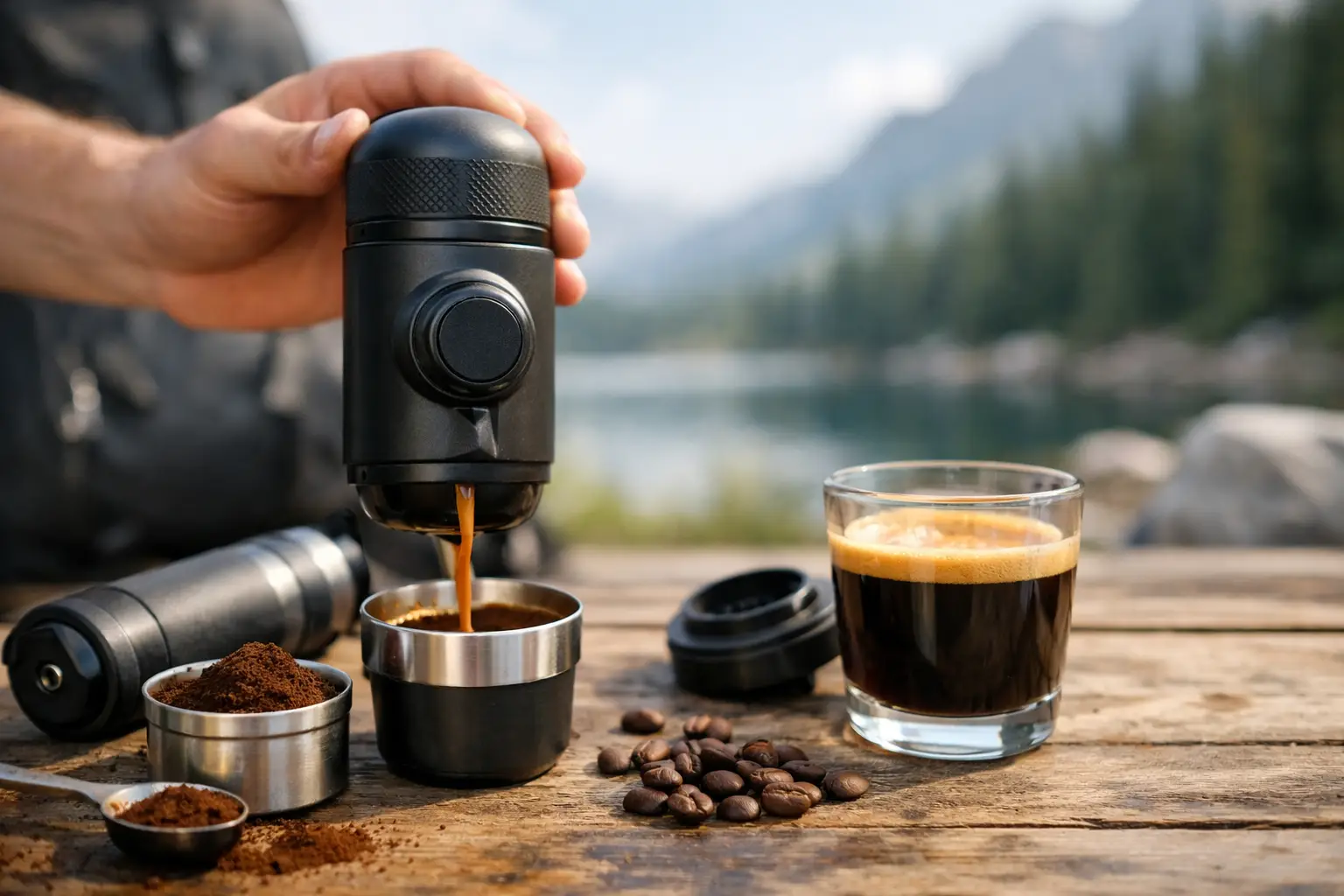
The first filter is simple. Ask whether the device is built around ground coffee or capsules. Capsule-based models are easier to travel with and more forgiving in bad conditions, but they cap your control and usually cap shot quality too. Ground-coffee models can produce a more convincing espresso, yet they demand a proper grinder and better prep.
Pressure claims deserve skepticism. Many portable makers advertise 15 to 20 bars, which sounds reassuring if you have spent any time around home espresso machines. In practice, the number itself is rarely the deciding factor. The real question is whether the brewer can maintain enough effective pressure through a compact puck while keeping water in the right temperature window. A manual pump device can claim impressive pressure and still produce a thin, under-extracted shot if the grind is off by a notch.
Thermal design is the second breakpoint. Some units require you to add hot water from a kettle. That usually gives better cup quality because you control the starting temperature. Electric self-heating models are more convenient in a car, office, or campsite, but they often trade speed and battery life for heating capability. If you expect back-to-back shots, many of them feel slow.
Then there is workflow. This category lives or dies on friction. If loading, brewing, and cleaning takes ten minutes and leaves wet grounds in your bag, portability loses its appeal. The best units are not just compact. They are system-friendly. They fit into a routine without creating extra mess, extra accessories, and extra decisions before caffeine.
Where portable espresso makers perform best
Travel is the obvious use case, but not all travel is equal. These brewers make the most sense in hotel rooms, road trips, offices, and short outdoor setups where you can still bring clean water and, ideally, preheated water. In that environment, a good portable unit can deliver a strong, concentrated shot that beats stale lobby coffee by a wide margin.
They also make sense for people who care about espresso enough to dislike compromises, but not enough to carry a full hand grinder, scale, kettle, and puck prep kit everywhere. That group is bigger than the espresso internet likes to admit. A practical coffee setup often wins over a perfect one.
For advanced home users, a portable maker can serve as a backup system. That might sound niche, but it is useful during kitchen remodels, office days, guest-room setups, or when your main machine is down for maintenance. In those moments, portability is less about adventure and more about redundancy.
The main trade-offs no product page explains well
Portable espresso makers almost always compress one variable to improve another. If a model is extremely light, it may feel flimsy or struggle with heat retention. If it self-heats, it may be heavier and slower. If it supports both capsules and grounds, one mode usually performs better than the other.
Shot volume is another common compromise. Many portable brewers produce something closer to a short coffee concentrate than a classic, syrupy espresso with lasting crema and body. That does not make them useless. It means expectations should match engineering reality. If your benchmark is a well-dialed 58 mm home machine, most portable units will not satisfy you. If your benchmark is airport coffee or a weak hotel pod machine, the category looks much stronger.
Grind quality is the hidden cost. Ground-coffee portable makers are only as good as the grinder feeding them. Pre-ground coffee usually produces inconsistent results, and cheap travel grinders tend to create too many fines and boulders for repeatable extraction. If you want the best from this category, the portable maker is only part of the system.
A practical way to evaluate any portable espresso maker
Start with the brew path. Is the chamber easy to fill without spilling? Is the basket capacity realistic for a satisfying shot? Does the device create enough resistance to slow water flow, or does it run through too fast? These details tell you more than marketing language.
Next, check how it handles temperature. A brewer that depends on freshly boiled water can be excellent if that fits your routine. A self-heating model needs to justify its battery draw and heating time. If it takes several minutes to heat a small volume of water and then only pulls one modest shot, convenience may be more theoretical than real.
Look closely at cleanup. Grounds-based brewers should eject a compact puck or at least allow easy rinsing. If coffee sludge collects in hinges, threads, or silicone seals, that problem gets worse with travel. Good portable equipment respects the fact that you may be cleaning it in an office sink, a gas station restroom, or a hotel bathroom.
Durability matters more here than with countertop gear. Portable products get tossed into backpacks, cup holders, and carry-ons. Threads strip. Lids crack. Pumps fail. If the design depends on fragile plastic at stress points, the convenience can disappear after a few trips.
Portable espresso maker review by user type
If you are a frequent traveler, the best choice is usually a simple manual brewer that uses hot water you source separately. It is lighter, less failure-prone, and often gives a better shot than battery-heated options. Pair it with a compact grinder only if you are serious about taste. Otherwise, bring fresh pre-ground coffee in single-dose containers and accept a smaller quality ceiling.
If you commute or work long days in an office, an electric model can make more sense. Here, convenience matters more than maximizing extraction. The ability to heat water and brew from one unit is useful when you do not have a kettle or want to avoid office kitchen traffic. Just be honest about speed. These devices are usually personal brewers, not tools for making coffee for a team.
If you camp, hike, or build mobile setups around road travel, weight and power management should decide the purchase. Manual pressure systems tend to win because they remove battery anxiety and are easier to troubleshoot. In field conditions, fewer electronic points of failure is usually the smarter trade.
If you are an espresso enthusiast trying to replicate home-machine results, most portable makers will feel like a side-grade at best. You can get enjoyable shots, especially with a good grinder and hot water discipline, but the category rewards flexibility more than obsession. Treat it as a compact ritual, not a full replacement for a dialed-in bar setup.
The honest verdict on value
A portable espresso maker is worth buying when it replaces bad coffee in a repeatable setting. That could be hotel mornings, client-site workdays, long drives, or weekends away. It is less worth buying as a novelty tool that lives in a drawer because the workflow is annoying.
Price matters, but system fit matters more. A cheaper manual unit with good thermal behavior and easy cleanup can outperform a more expensive electric model that tries to do everything. The right purchase is not the one with the longest feature list. It is the one you will actually pack, use, and maintain.
For most people, the sweet spot is a well-built manual portable espresso maker paired with a reliable source of hot water. That setup strips away unnecessary complexity while preserving the one thing that matters most: a shot that tastes intentional. If your routine demands true self-heating, go in with realistic expectations and prioritize durability over flashy pressure claims.
The smartest portable coffee gear earns its place the same way any good system does. It reduces friction, survives real use, and gives you a result that feels better than compromise. That is the standard to carry into any purchase.