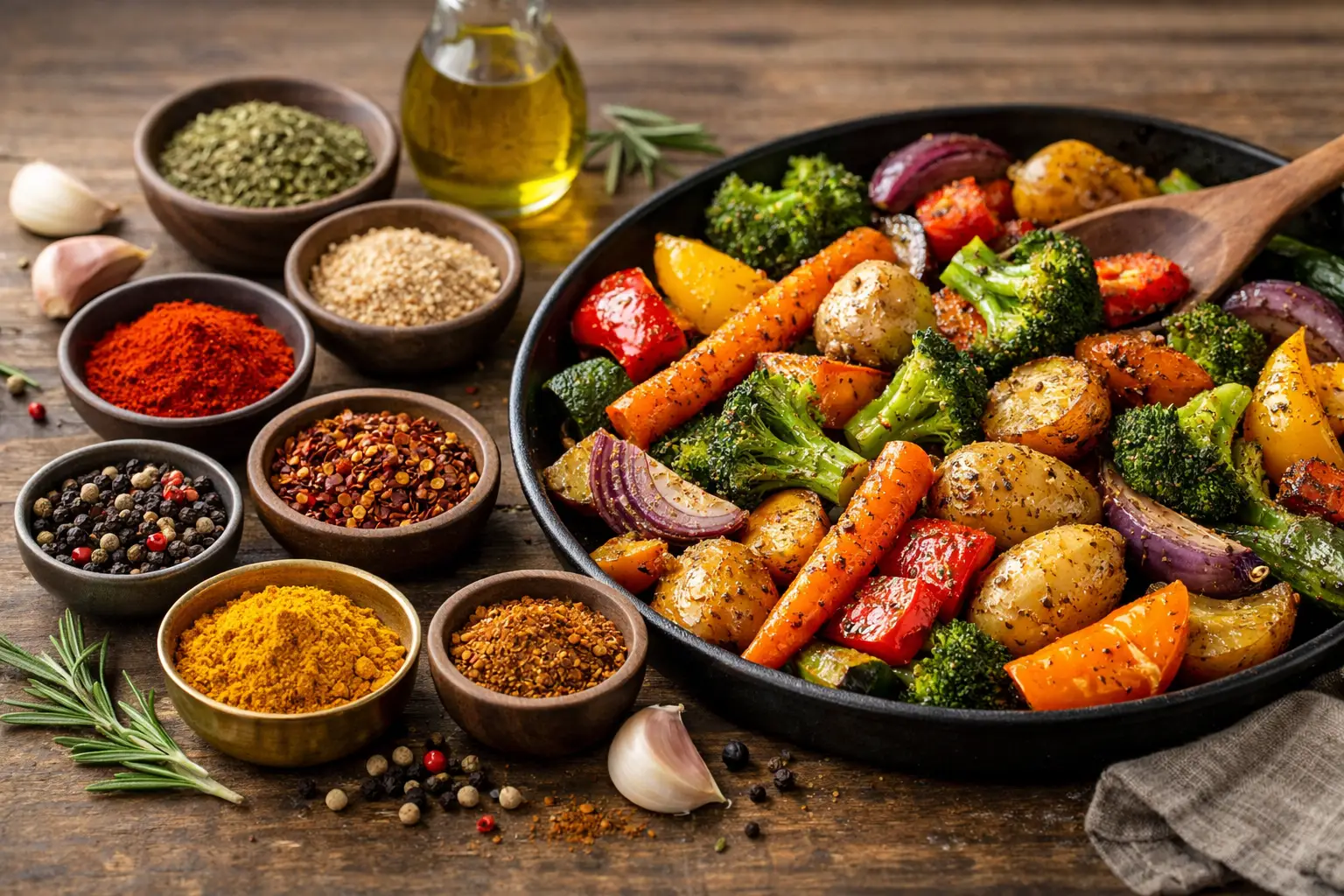
Roasted vegetables fail for one boring reason: the seasoning logic is off. You can buy perfect carrots, trim flawless cauliflower, preheat the oven correctly, and still end up with flat flavor if the spice blend fights the vegetable instead of amplifying it. The best spices for roasted vegetables are not a single universal answer. They depend on water content, sweetness, roast time, and how aggressively a vegetable can handle heat.
That is the useful way to think about seasoning. Not as a random shelf grab, but as a system.
The best spices for roasted vegetables start with the vegetable type
Dense, sweet vegetables want contrast. Fast-cooking, watery vegetables usually want restraint. Brassicas can handle bolder, darker spices because they develop deep caramelized edges and a slight bitterness that benefits from spice with backbone.
Carrots, sweet potatoes, winter squash, and beets respond well to cumin, coriander, smoked paprika, chili powder, cinnamon in small doses, and fennel seed. These spices sharpen sweetness instead of making the tray taste like dessert. Cumin is especially reliable because it adds earthiness without covering the vegetable.
Cauliflower, broccoli, and Brussels sprouts can take more aggressive seasoning. Curry powder, turmeric, cumin, sumac, Aleppo pepper, garlic powder, onion powder, and black pepper all work well here. Roasting brings out nutty, charred notes in brassicas, so spices with toast, bitterness, or citrusy lift usually perform better than delicate herbs.
Zucchini, eggplant, mushrooms, onions, and bell peppers need a lighter hand. They release more water and can go soft before spices have time to bloom deeply. Paprika, oregano, thyme, fennel seed, red pepper flakes, and coriander are good choices, but keep the coating thin. If you overload these vegetables, the pan gets wet and the spices turn muddy.
Potatoes sit in their own category because they are basically a seasoning delivery platform. Paprika, rosemary, garlic powder, onion powder, black pepper, cumin, and mustard powder all work. Potatoes can also tolerate layered seasoning, meaning one base spice for earthiness and a second for top-note aroma.
The core spice rack that actually earns counter space
If you roast vegetables often, you do not need twenty options. You need a tight lineup with distinct functions.
Cumin is the workhorse. It adds depth and makes sweet vegetables taste more savory. Smoked paprika is the fastest route to roast-house flavor, especially when the vegetables do not get enough time for hard caramelization. Coriander brings brightness and a citrus-adjacent quality that keeps roots from feeling heavy. Garlic powder is more reliable than fresh garlic on high-heat trays because it distributes evenly and is less likely to burn. Black pepper provides structure, not just heat. Sumac adds acidity without moisture, which matters when you want brightness but do not want steamed edges.
Then there are specialists. Turmeric gives color and mild bitterness, best paired with other spices instead of used alone. Aleppo pepper adds gentler heat and fruitiness than crushed red pepper. Mustard powder is underrated on potatoes, cauliflower, and cabbage. Fennel seed is excellent with carrots, onions, and roasted tomatoes, but only when lightly crushed so it opens up in the oil.
If your cabinet already has these eight to ten spices, you can build almost every high-performance roast profile you need.
Best spices for roasted vegetables by flavor profile
The easiest way to stop overthinking tray seasoning is to use flavor families.
Warm and savory
Use cumin, smoked paprika, garlic powder, black pepper, and a little onion powder. This profile works on cauliflower, carrots, potatoes, and chickpea-vegetable sheet pans. It is broad, dependable, and hard to ruin. If you want one default formula for weeknight roasting, start here.
Bright and sharp
Use coriander, sumac, black pepper, and a small amount of fennel seed. This works especially well on carrots, cauliflower, onions, and green beans. The point is lift. Heavy vegetables feel more precise and less dull.
Earthy and deep
Use cumin, turmeric, chili powder, and mustard powder. Best for sweet potatoes, beets, cabbage wedges, and Brussels sprouts. This profile feels more substantial and is useful when roasted vegetables are serving as the main event, not just a side.
Smoky and spicy
Use smoked paprika, chipotle powder or chili powder, garlic powder, and black pepper. Best for potatoes, cauliflower, mushrooms, and peppers. Good for grain bowls, tacos, or any meal where the vegetables need to compete with richer components.
Mediterranean-leaning
Use oregano, thyme, fennel seed, paprika, and black pepper. This is strong on zucchini, eggplant, onions, tomatoes, and peppers. It is less about heat and more about aromatic balance.
Timing matters more than most home cooks think
Spices do not all behave well under the same roast conditions. This is where advanced home cooks can get cleaner results with one adjustment.
Hard spices and powders like cumin, coriander, paprika, turmeric, mustard powder, and garlic powder can usually go on before roasting. They benefit from contact with oil and dry heat. Delicate dried herbs and finishing spices are different. Oregano, thyme, sumac, and some chili flakes can taste fresher if part of the seasoning goes on after the tray comes out.
A simple split-seasoning system works well. Toss vegetables before roasting with oil, salt, pepper, and the base spices. Then finish with one brighter spice after roasting, such as sumac, coriander, or another pinch of black pepper. You get depth from the oven and clarity at the end.
This also prevents the common problem where every spice note tastes baked flat.
The oil-to-spice ratio that keeps trays clean
The easiest way to ruin roasted vegetables is to treat spices like a dry rub without enough fat distribution. Too little oil and the spices scorch in patches. Too much oil and the vegetables fry softly instead of roast.
For most sheet pans, aim for enough oil to lightly coat every surface without pooling. Then season in layers, not all at once. Salt first, then spices. If you are using a blend with fine powders, toss thoroughly before the vegetables hit the pan. Uneven spice distribution creates bitter hotspots.
This is also why pre-mixing spice blends in a small bowl beats sprinkling directly over the tray. It is not chef theater. It is batch consistency.
Where specific pairings outperform generic blends
Generic “roasted vegetable seasoning” blends usually fail because they assume all vegetables roast the same way. They do not.
Carrots love cumin and coriander because both play well with sweetness. Add smoked paprika if you want more savory depth. Cauliflower is one of the best targets for curry-style seasoning because it absorbs fat well and develops enough browning to support turmeric, cumin, coriander, and chili. Brussels sprouts handle black pepper, mustard powder, and smoked paprika better than soft vegetables do because their charred edges can stand up to intensity.
Sweet potatoes often get pushed toward cinnamon or pumpkin-style seasoning, which can work, but only if the rest of the meal supports it. In savory cooking, cumin, smoked paprika, coriander, and chili powder are usually stronger choices. They make sweet potatoes feel structured instead of sugary.
Zucchini is where restraint wins. Too much spice and it tastes dusty. A little paprika, thyme, black pepper, and fennel seed goes much further than a heavy curry blend. Mushrooms are similar. They like black pepper, thyme, smoked paprika, and garlic powder, but need enough heat and pan space to brown, not steam.
Build two default blends and stop reinventing dinner
If you roast vegetables multiple times a week, create two house blends.
The first should be an all-purpose savory blend: cumin, smoked paprika, garlic powder, black pepper, and onion powder. Use it on potatoes, cauliflower, carrots, Brussels sprouts, and mixed sheet pans.
The second should be a brighter finishing blend: sumac, coriander, black pepper, and a pinch of Aleppo pepper. Use it after roasting, especially on roots, cauliflower, and onions.
This saves time, but more importantly, it creates a repeatable flavor workflow. You are no longer improvising every tray.
The trade-offs worth knowing
Smoked paprika is powerful, but too much can make vegetables taste one-dimensional and slightly artificial. Turmeric adds color fast, but on its own it can read flat and chalky. Garlic powder is efficient, though lower-quality versions can taste harsh. Whole spices often taste better when freshly ground, but if your weeknight system depends on speed, good-quality ground spices are a smarter choice than whole spices you never use.
There is also the sweetness problem. Vegetables like carrots, squash, and beets naturally intensify in the oven. If your spice blend leans too warm without enough bitter, acidic, or savory counterweight, the tray can feel heavy after three bites. That is why cumin, pepper, mustard, and sumac matter. They keep roasted vegetables from tasting soft around the edges.
Good seasoning makes roasted vegetables feel deliberate. Great seasoning makes them feel finished. Build around the vegetable, split your seasoning before and after the oven, and keep a small set of spices that solve specific problems. Once that system is in place, your sheet pans stop being side dishes and start carrying the meal.