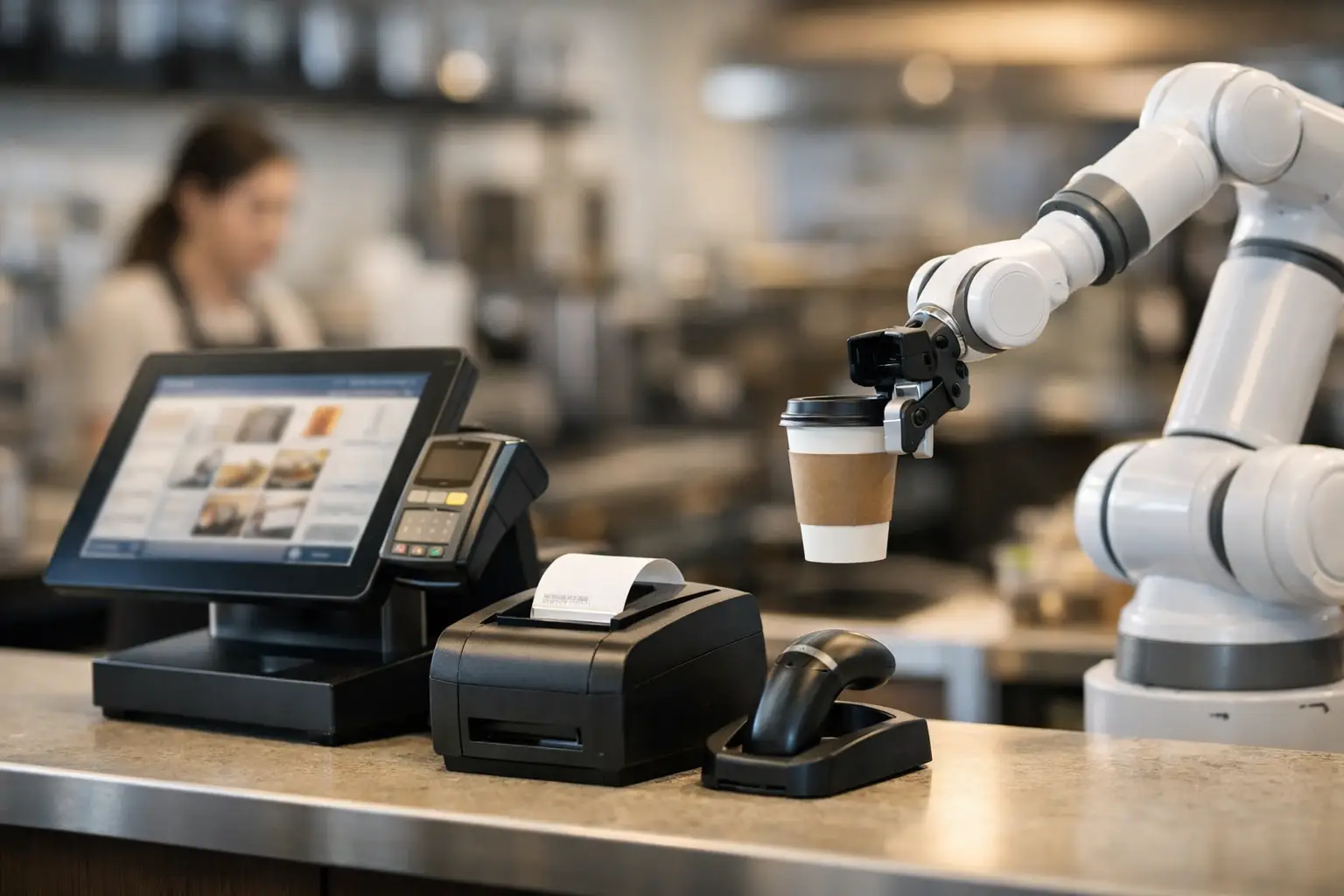
A lot of POS systems still act like expensive cash registers with a nicer screen. That gap is exactly why the future of POS automation matters now. For restaurants, retail shops, service counters, and hybrid businesses, the next wave is not about flashy checkout gimmicks. It is about turning the POS into an operating system that quietly handles pricing, labor signals, inventory movement, customer identity, and exception management in real time.
That shift will change who wins on margin. Operators who treat POS automation as a back-office upgrade will miss the point. The real opportunity is speed plus control. When the front counter, kitchen, stockroom, and reporting layer start talking to each other with fewer manual handoffs, the business stops leaking money in boring places.
Where the future of POS automation is actually heading
The strongest trend is not full autonomy. It is guided automation. Most businesses do not need a machine making every decision. They need a system that handles repeatable actions, flags unusual behavior, and gives staff the shortest path to a good outcome.
Think about the common failure points in a busy operation. Incorrect modifiers. Inventory counts that lag reality by two days. Discounts applied inconsistently. Orders routed to the wrong prep station. Refunds that require a manager because no one trusts the workflow. A modern POS should reduce those errors automatically, then surface only the decisions that deserve human judgment.
That is why the future of POS automation looks less like a robot cashier and more like a tightly connected command layer. The POS will increasingly automate the boring middle. It will push menu updates across channels, adjust item availability based on stock thresholds, tag risky transactions, suggest staffing changes from sales patterns, and trigger follow-up tasks when something falls outside the norm.
For operators, that means fewer clicks and fewer recovery costs. For customers, it means fewer visible breakdowns.
The POS is becoming a live data engine
Historically, many businesses used POS reports after the fact. You closed the day, exported numbers, then tried to understand what happened. That model is too slow for modern operations.
The next generation of automation treats transaction data as a live signal. If a lunch rush is trending above forecast, labor prompts can appear before service degrades. If a fast-moving SKU suddenly drops in velocity, the system can flag a pricing issue, stockout risk, or channel mismatch. If a certain combo drives higher profit than a popular standalone item, that can shape upsell logic automatically.
This matters most in environments with thin margins. A restaurant with high modifier complexity, a retail business with omnichannel inventory, or a service business handling appointments and walk-ins cannot afford delayed visibility. The future POS stack is not just recording the sale. It is constantly interpreting the sale.
That does not mean every business needs enterprise-grade analytics. It means even smaller operators will expect practical automation tied to actual workflows. A useful system might auto-86 menu items, route online orders by prep capacity, or recommend reorder timing from sell-through trends. Those are not headline features, but they protect cash flow.
AI will sit inside workflows, not above them
A lot of POS vendors market AI like a magic layer that will somehow optimize the whole business. Most of that framing is lazy. AI only becomes valuable when it is wired into clear operational moments.
The better use case is narrow and specific. AI can predict likely no-shows, identify unusual void patterns, categorize customer purchase behavior, or draft pricing suggestions based on cost changes and sales history. It can help managers spot drift before that drift becomes expensive.
What it should not do is force operators into black-box automation they cannot audit. If a system changes reorder logic, labor recommendations, or discount triggers, someone needs to understand why. Trust in automation is earned through visibility. Businesses will favor tools that explain the recommendation, show the source data, and let managers set guardrails.
The winners in this category will be the vendors that make AI feel like a skilled assistant embedded in the POS, not a theatrical add-on.
Hardware will matter more than software people expect
There is a tendency to talk about POS automation as if it lives entirely in the cloud. It does not. Hardware still shapes speed, reliability, and labor efficiency.
A modern setup might include fixed terminals, handheld order devices, kitchen display systems, receipt and label printers, barcode scanners, smart cash drawers, self-service kiosks, and customer-facing screens. If those devices are poorly matched, automation breaks at the exact moment it should save time.
This is one of the more underappreciated realities in the future of POS automation. Better software cannot fully compensate for weak device strategy. A kiosk that slows payment flow, a handheld with bad battery life, or a printer that fails during peak volume creates immediate operational drag.
Smart operators will design POS automation around specific service paths. Counter service needs different hardware logic than tableside ordering. A cafe with app pickup has different pressure points than a boutique retailer with in-store fulfillment. The businesses that get this right will treat terminals, scanners, displays, and payment hardware as one coordinated system.
Automation will be judged by recovery, not just speed
Most sales pitches focus on faster checkout. That is useful, but speed is only half the story. The stronger test is how well the system handles friction.
What happens when the internet drops, a payment fails, inventory is wrong, or a customer wants to split a complicated order across channels? Good automation does not freeze under exception cases. It gives staff a clear fallback path.
This is where many POS systems still disappoint. They automate ideal scenarios, then dump edge cases back onto humans with messy permissions and poor interface logic. Over the next few years, buyers will care more about resilience. Can the system continue offline? Can managers resolve disputes quickly? Can the staff recover from a bad scan, wrong modifier, or delayed prep ticket without improvising?
That is real automation maturity. Not fewer humans. Better recovery design.
Payments, loyalty, and identity are collapsing into one layer
Another major shift is the merging of payment data, customer profiles, and loyalty behavior. For years, these functions often sat in separate tools. That fragmentation created duplicate records, clumsy promotions, and weak retention logic.
The future model is tighter. A customer taps to pay, the POS recognizes purchase history, applies the correct reward rule, updates the profile, and informs the next offer. For the business, this creates cleaner attribution. For the customer, it removes the annoying dance of scanning one app, entering another number, and hoping points show up later.
There is upside here, but also risk. The more identity data flows through the POS, the more seriously businesses need to treat privacy, permissions, and security. Not every operator needs aggressive personalization. In some cases, simple, accurate loyalty automation beats complex behavioral targeting. It depends on customer frequency, average order value, and how much trust the brand has earned.
Smaller businesses will get enterprise-style controls
One of the most practical changes ahead is cost compression. Features that used to sit behind enterprise contracts are becoming accessible to independent operators and multi-location small businesses.
That includes smarter role-based permissions, exception alerts, cross-location inventory visibility, centralized menu control, and automated reporting that does not require an analyst to clean it up. This is good news for owners who are scaling from one location to three, or from a weekend pop-up to a permanent footprint.
The impact is less glamorous than people think. It means fewer owner text messages, cleaner closeouts, less spreadsheet triage, and faster training for new staff. In real businesses, those gains matter more than futuristic branding.
At NawaMag, we look at systems through that lens. The best tools are not the loudest. They are the ones that reduce recurring friction without creating new complexity elsewhere.
What operators should do before buying into the hype
The smartest move right now is not chasing every new feature. It is mapping your current bottlenecks with painful honesty.
If your biggest issue is inventory drift, then automated menu sync and stock deduction deserve more attention than AI upselling. If your problem is long lines during peak hours, handheld ordering or better payment hardware may outperform a full kiosk rollout. If manager time disappears into refunds and overrides, start with permissions, audit trails, and exception workflows.
This is where POS automation becomes strategic. The right stack depends on transaction volume, service model, staff skill level, and how often your operation changes. A high-volume quick-service concept can justify aggressive automation faster than a boutique business built on high-touch interactions. Full automation is not always the best customer experience.
The strongest operators will ask a simple question: which tasks should become invisible, and which moments should stay human? That line will shape the next decade of POS design.
The future of POS automation is not about replacing judgment. It is about removing noise, tightening feedback loops, and giving good operators better control over the systems that decide their margins every day.