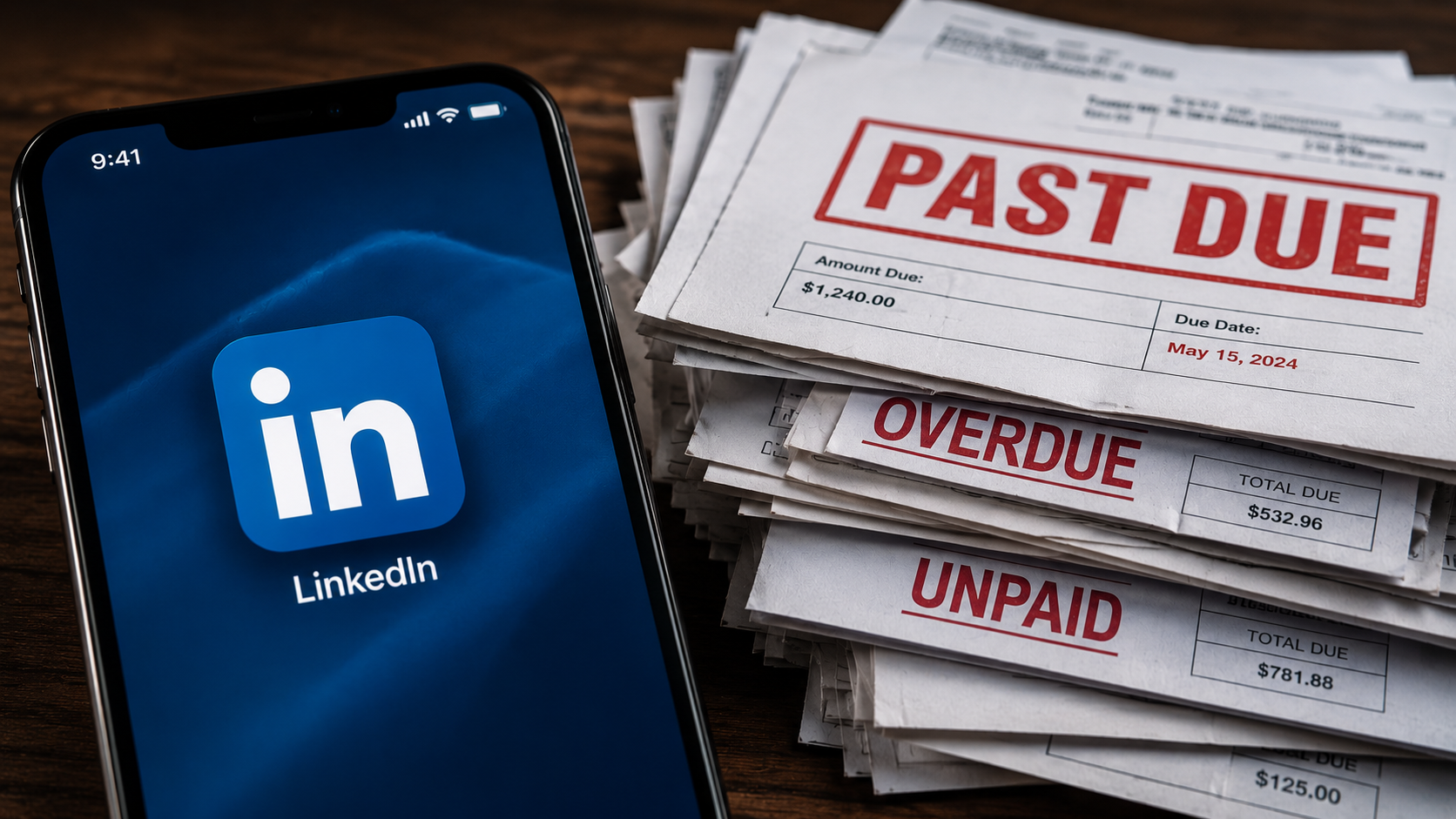
I have been saying LinkedIn is a scam for a long time now. Not as a joke, not as a rant after a bad day scrolling the feed, but as a considered opinion based on watching the platform closely for years. So when I saw the news that the Texas Attorney General opened a formal investigation into LinkedIn over “ghost jobs,” fake or inactive postings that the platform keeps live while charging job seekers up to seventy dollars a month for Premium, I did not feel vindicated so much as unsurprised. This was always where it was heading.
Let me walk you through why I believe LinkedIn is a scam, using my own experience on the platform, some real data that backs it up, and a few historical parallels that make the whole thing easier to understand.
The Ghost Job Problem Is Now an Official Investigation
In the summer of 2026, Texas Attorney General Ken Paxton issued a Civil Investigative Demand to LinkedIn Corporation, ordering the company to hand over internal documents, communications, and data about how it verifies job listings. The allegation is straightforward. LinkedIn reported around seventeen point eight billion dollars in revenue in fiscal year 2025, much of it from Premium subscriptions priced between thirty nine ninety nine and sixty nine ninety nine a month, sold to people who are often displaced workers, recent graduates, and veterans looking for real jobs. The Attorney General’s office cited independent research showing that ghost jobs, listings that either do not correspond to a real open role or are kept up despite no intention to fill them, may account for between a fifth and a third of all postings on the platform. LinkedIn does not independently verify most of them.
That is not a rounding error. That is the business model.
Job seekers pay in hope. They pay for InMail credits, for the “who viewed your profile” feature, for “top applicant” badges, believing these tools will get them hired faster. Meanwhile, LinkedIn’s real money comes from corporate recruiter seats and job ad placements, which means the company has very little financial incentive to aggressively clean out stale, fake, or zombie listings if those listings keep people logging in, clicking, and renewing their subscriptions. Companies themselves often leave postings up indefinitely to signal growth to investors, to build a resume database for later, or to benchmark salaries, with zero intention of hiring anyone today. Add “Easy Apply,” which turns a single listing into a black hole receiving thousands of applications within hours, and you get a platform that feels less like a job board and more like a pay to play lottery where the house always wins.
Visibility Is Designed to Be a Full Time Job
Here is something I have said for a while now, and it still holds up. LinkedIn is designed to work full time. You can create the most valuable, most useful piece of content on the platform, pour your real experience and knowledge into it, and at the end of the day get zero reactions, zero comments, and zero likes. Meanwhile you have to go watch other people’s posts to see how the hustlers are actually making it, because they are running groups where they promote each other’s content, comment on each other’s posts within minutes of publishing, and manufacture the exact kind of early engagement the algorithm is looking for.
These are called engagement pods, private circles that automatically like and comment on each other’s posts the moment they go live. LinkedIn’s ranking model leans heavily on velocity in the first sixty to ninety minutes after a post goes up and on how much comment activity it generates in that window. If you are not playing that game, or spending hours a day leaving comments on other people’s feeds to build reciprocity, the algorithm treats your content as dead on arrival. The result is a system where genuine expertise, shared once, honestly, and without a coordinated boost, rots at the bottom of the feed. Getting visibility on LinkedIn is not a side activity anymore. As hard as that visibility is to earn, it has become a full time job in itself. So you either post constantly to stay relevant, or you go do your actual day job. Trying to do both properly is close to impossible.
There is also a geography problem baked into the same system. There have been public complaints in the past, some from creators running side by side experiments with identical content, showing that the platform gives more visibility to American creators over Asian ones, and to white creators over brown or Black ones. This lines up with how large ranking models tend to behave. They weight content partly by the purchasing power and network density of the audience reading it, so creators based in North America or Western Europe start with a higher distribution baseline by default, while creators in Asia, Africa, or Latin America face an uphill climb because their networks are assigned lower target value by the system. None of this is a conspiracy theory. It is closer to how commercial recommendation engines are built. Follow the money and you find the bias built right into the plumbing.
I Predicted This Would Hit a Wall. It Has.
I said three to five years ago that this model would eventually collapse under its own weight, and that prediction has held up. People are either jobless or greedy, sometimes both, and that combination is exactly why they end up on LinkedIn chasing visibility that was never designed to reward them fairly.
The numbers back this up. Multiple industry reports from 2025 and into 2026 show organic reach on LinkedIn falling anywhere from a third to over sixty percent depending on the account type and the report you read, with company pages hit hardest, some analyses showing a drop of sixty to sixty six percent in reach between 2024 and 2026. One widely cited breakdown found that top creators grew their share of total visibility from about fifteen percent to thirty one percent since 2022, while regular, occasional posters saw their visibility crash from fifty seven percent down to twenty eight percent. In plain language, the platform has become a winner take all system where a small number of consistent posters absorb almost all the oxygen, and everyone else is background noise.
The feed itself tells the story. What used to be a professional directory has shifted into a cringe heavy social network built around performative “thought leadership,” AI generated motivational posts, and outright engagement bait. The actual utility of the platform, real professional connections, is now buried behind paywalls and algorithmic noise. As organic reach dies, LinkedIn’s answer has been to push people harder toward Premium subscriptions, sponsored posts, and paid boosts, essentially charging creators to reach the very followers they already built for free. That is not a bug in the system. That is the plan working as intended.
The Coffee Shop Test
Here is the part of this whole thing that bothers me the most, because I have looked closely at it. I did a deep dive a while back into a number of very popular LinkedIn profiles, people with well over a hundred thousand followers, which is genuinely hard to achieve given how the platform’s structure works against organic growth. Most of these accounts belonged to people with no significant work history or real business experience. Educational backgrounds that were, generously, mediocre. Everyone calls themselves a CEO, a CFO, a director of something. But listen to them talk for long enough and you get the strong sense that if you handed them an actual coffee shop or a small convenience store to run, they would drive it into the ground within a few months and file for bankruptcy. And yet these are the people the platform rewards with free algorithmic boosts, because they spend their days singing LinkedIn’s praises and telling everyone how good the platform has been for their success.
This is not a coincidence. It is a structural difference between digital coaching and running a real business. A bad LinkedIn post costs nothing to publish. If it flops, you delete it or pivot to a new angle tomorrow. A bad inventory order at an actual coffee shop burns real cash immediately. On LinkedIn, the feedback loop is incentivized validation, engagement pods and algorithms reward whoever plays the game best, regardless of whether they know anything real. In a physical business, the feedback loop is ruthless. Customers vote with their wallets and suppliers demand payment whether or not your last post got five hundred likes. Proof of success on LinkedIn is perceivable, follower counts, likes, an inflated bio title. Proof of success in a real business is measurable, net margin, inventory turnover, cash flow, a profit and loss statement that does not lie to you.
Since nobody runs a background check on a headline that says “Founder and CEO,” title inflation is free and unlimited. The entire industry that has grown up around this is, in effect, a meta funnel. Buy my five hundred dollar coaching session so I can teach you how I got to a hundred thousand followers, so that you can eventually charge five hundred dollars to teach someone else the exact same thing. It is turtles all the way down, and at no point does anyone in the chain need to have run so much as a lemonade stand with real overhead.
Will They Ever Fix It
I do not think LinkedIn will fix this on its own, and I have said as much before. People are either jobless, hungry, or greedy, and very few of them are thinking about doing the right thing when they are worried about their next paycheck or their next client. LinkedIn is a multi billion dollar company. They will billionaire their way out of any investigation that comes their way.
That is not cynicism, it is just how large platforms have historically operated. Microsoft did not become a company worth trillions by letting a state Attorney General’s document request threaten a core revenue engine. Expect lawyers, expect fine print in the Terms of Service, expect a settlement that amounts to maybe a couple of days of company revenue if it ever gets that far, and expect the machine to keep running exactly as it did before. LinkedIn could introduce mandatory identity verification, tax record checks, or real revenue verification for every self declared founder and CEO on the platform. It already offers optional government ID checkmarks. But making that mandatory would wipe out a large share of its active accounts and job listings overnight, and lower activity means lower engagement numbers to report to shareholders and advertisers. A platform will rarely choose to shrink its own reported user base voluntarily.
The platform also structurally needs the fakers. People running real businesses, with actual inventory, staff, and thin margins, do not have six hours a day to write ten paragraph motivational posts or leave fifty comments on other people’s feeds. The people who do have that kind of time are, almost by definition, the ones without real operational responsibilities, the digital coaches and narrative spinners. If LinkedIn cleaned house, the feed would look like a ghost town. So the system is not going to collapse overnight. It will keep rotting quietly into a pay to play paywall where performative noise gets rewarded and real value gets ignored, and the only sane way to use it is as a transactional directory for contact information, never as a source of real world business validation.
The Rich Dad Blueprint Behind the Modern Guru
A lot of the people who present themselves as LinkedIn’s biggest success stories are running a playbook that is decades old. Think about Robert Kiyosaki and “Rich Dad Poor Dad,” a book that sold more than thirty two million copies built around the contrast between his own hardworking but modest “Poor Dad” and a wealthy mentor called “Rich Dad” who supposedly taught him everything about money. Journalists and researchers who went looking for this mentor over the years, including investigations referenced by Forbes and Smart Money, never found solid evidence that “Rich Dad” existed as a distinct real person. Kiyosaki himself has given shifting, evasive answers about the man’s identity for decades, at one point suggesting a composite of several mentors. His own company, Rich Global LLC, filed for bankruptcy in 2012 rather than pay a nearly twenty four million dollar judgment owed to a former business partner, a corporate maneuver that let him keep his personal wealth intact. Kiyosaki got rich, in large part, by selling a story that nobody could actually verify, and in the process he created an entire generation of imitators, people teaching other people how to sell the same unverifiable rags to riches story, without ever proving the original rags were real.
That is the blueprint modern LinkedIn gurus are running, just with a feed and a comment section instead of a seminar circuit. The formula relies on a manufactured rock bottom. To build trust with an audience, you have to convince them you started lower than they did. That means downplaying whatever real advantages you had, family capital, an existing business, a safety net, and reframing them into “I was sleeping on a couch with forty seven dollars in my account.” It is worth being fair here. Some of the most visible names in modern hustle culture, Gary Vaynerchuk for example, did come from real immigrant hardship. His family arrived in the United States with almost nothing and built a liquor store business from scratch that he later helped grow from three million to sixty million dollars in revenue. That part is documented and real. The manipulation is not always in the origin story itself. It is in how that story gets repackaged and sold to people in completely different circumstances, as if working eighteen hour days and posting constantly is a repeatable formula rather than one specific set of choices made under one specific set of conditions decades ago.
This is survivorship bias dressed up as a method. Someone who succeeded through a mix of early timing, family support, or plain statistical luck presents the outcome as a guaranteed step by step system. They are selling the lottery ticket after the numbers have already been drawn. And notice how the actual product being sold keeps degrading over time. It starts as expertise in real estate, or wine, or scaling an agency. It ends as content about how to make content, books about books, masterminds that teach you how to run masterminds. The people preaching freedom from the nine to five rat race are, in practice, selling their followers a different rat race entirely, one built around daily content, engagement pods, and selling the next tier of the same course to the next round of desperate buyers. In an interesting twist, none of this is even new. Multi level marketing schemes ran the exact same emotional playbook decades before social media existed, manufactured urgency, a glorified founder story, and a promise that the only thing standing between you and wealth was your own effort. LinkedIn just gave the same con a faster, more scalable delivery system.
Bots Talking to Bots, and What We Are All Actually Achieving
The more time I have spent on LinkedIn, the more obvious it becomes how fake most of it is. Someone writes a post using ChatGPT. A line of people show up in the comments and write responses, also generated with ChatGPT. No human brain is really involved in the writing, the reading, or the evaluating of any of it. It gets published to trigger an algorithm, evaluated by other synthetic text in the replies, and ranked by an AI based system that scores it on semantic weight. Machines are writing content for other machines to summarize, while actual humans scroll past feeling isolated, and given that LinkedIn has hundreds of millions of accounts, that is not a small side effect, it is happening at a genuinely massive scale.
This lines up closely with what has become known online as the Dead Internet Theory, a concept that first showed up on fringe internet forums around 2021, arguing that a large share of what looks like human activity online is actually bots and automated content shaped by algorithmic curation. What started as a fringe conspiracy theory about coordinated manipulation has, in the age of generative AI, become a fairly reasonable description of what a lot of feeds actually look like. Independent reports on bot traffic across the internet, including analysis from security firms like Imperva and Fastly, have put non human web traffic somewhere between a third and roughly half of all activity in recent years. LinkedIn is not exempt from that trend. It may be one of its clearest showcases.
At the individual level, none of this is really about human connection anymore. It is narrative survival dressed up as networking. The poster wants to maintain a quota of “thought leadership” to stay top of mind for recruiters or clients, without spending real hours writing anything original. The commenter runs an automated tool that drops dozens of meaningful looking comments a day, because the platform rewards high activity accounts with more profile views and reciprocal clicks. Nobody in this loop is trying to share anything true. They are trying to trick an algorithm into inflating a digital footprint, so they can sell a service, land a job, or simply look important. For the platform itself, this artificial loop serves a very specific corporate purpose. Millions of accounts trading AI generated text back and forth sends daily active session numbers, time on site, and comments posted through the roof, which justifies higher ad prices and stronger Premium subscription pitches to job seekers who believe they are missing out on a bustling marketplace. If LinkedIn purged every generic AI post and auto generated comment tomorrow, its engagement numbers would fall off a cliff and the feed would look like a ghost town.
What we are actually achieving here, as humanity, is the total inflation and devaluation of written language. When text becomes infinite, effortless, and generic, it stops carrying any value at all. People scroll through these feeds and feel the emptiness without always naming it. It creates a kind of digital fatigue, the sense of standing in a crowded room where everyone is wearing a mask, reading from a script, clapping for each other on cue, while nobody is actually listening. It is why the real signal has been quietly moving away from public feeds entirely. Serious founders and decision makers are shifting their actual conversations into private emails, small group chats, and face to face meetings, and leaving the public feed to the bots.
The Pyramid That Sells Itself as a Ladder
There is a darker layer underneath all of this, and it has to do with who actually gets hurt. The truth is we are already sitting at the bottom of the pyramid. The influencers and creators who kicked off this entire trend a few years ago already built their following, banked their engagement, sold their courses, sold their get rich schemes, and bought their houses and their cars. They are still cashing checks off the back of a following that is, sadly, made up largely of young people in developing countries who genuinely believe the whole thing is real. By hustling every single day, chasing trends, and obeying whatever the algorithm demands this week, some small fraction of them will eventually get their hundred thousand followers too, and the cycle renews itself with a fresh batch of buyers.
This is where the geographic and economic asymmetry of the pitch becomes genuinely predatory. Selling a two hundred and ninety nine dollar “LinkedIn Mastery” course to someone in North America or Western Europe is a minor discretionary purchase. Selling that exact same course to a twenty one year old in South Asia, Latin America, or Africa can represent weeks or months of real local wages. The course material almost always assumes a Western context anyway, native English fluency, warm domestic professional networks, high trust payment systems, and direct access to high ticket clients, none of which the buyer usually has. When the strategy inevitably fails because of these very real structural barriers, the guru’s answer is never to admit the course was built for the wrong audience. It is to tell the buyer they simply lack hustle, and to sell them the next tier up.
What actually happens to the people who buy in is millions of young, talented people spending their most productive years feeding free data and engagement into someone else’s algorithm, performing unpaid distribution labor for a platform while competing over low margin freelancing scraps. It traps them in a kind of digital sweatshop, burning ten to twelve hours a day on engagement farming instead of acquiring the deep, specialized skills, engineering, trades, finance, or building a real local business, that actually create lasting stability. The earliest wave of creators benefited from a genuine historical accident, early adopter organic reach on hyper growth platforms roughly between 2014 and 2020, when algorithms handed out enormous free distribution just to build up user density. That window is closed. Trying to replicate a 2017 style growth trajectory today, using nothing but organic posting, is close to mathematically impossible without heavy paid ad spend or existing authority.
The pyramid keeps running because desperation is the most renewable resource there is. As long as real economic mobility stays difficult in a given place, young people will keep reaching for the promise of a borderless digital gold rush. The bitter irony is that while a generation burns its youth trying to figure out how to write a viral post, the people actually building sustainable, high margin wealth in those same economies are usually running the unglamorous, real world businesses nobody wants to post about. Local supply chains, cold storage, equipment import, specialized trades, practical service businesses. The digital hustle sold on LinkedIn was never a bridge out of the bottom of the pyramid. For most of the people buying into it, it is a treadmill built to look like a ladder.
Where That Leaves Anyone Trying to Use LinkedIn Honestly
None of this means LinkedIn is useless in every context. For B2B sales, recruiting outbound, and basic company research, it still functions as a database, because the companies you need to find are genuinely on it. What it has stopped being is a fair place for an individual job seeker or an honest professional to build something through merit alone. If you run a real business, with real inventory, real staff, and real margins, the only sane way to treat LinkedIn is as a directory you dip into when you need it, never as a place you go looking for validation, community, or truth.
I said LinkedIn is a scam before it was fashionable to say it, and I said this model would eventually hit a wall. The wall has arrived, it is showing up in the reach numbers, in the state investigations, and in how empty the feed feels to anyone still paying attention. The platform will not fix itself, because the fakers, the bots, and the ghost jobs are not a flaw in the system. They are the system, running exactly as designed.