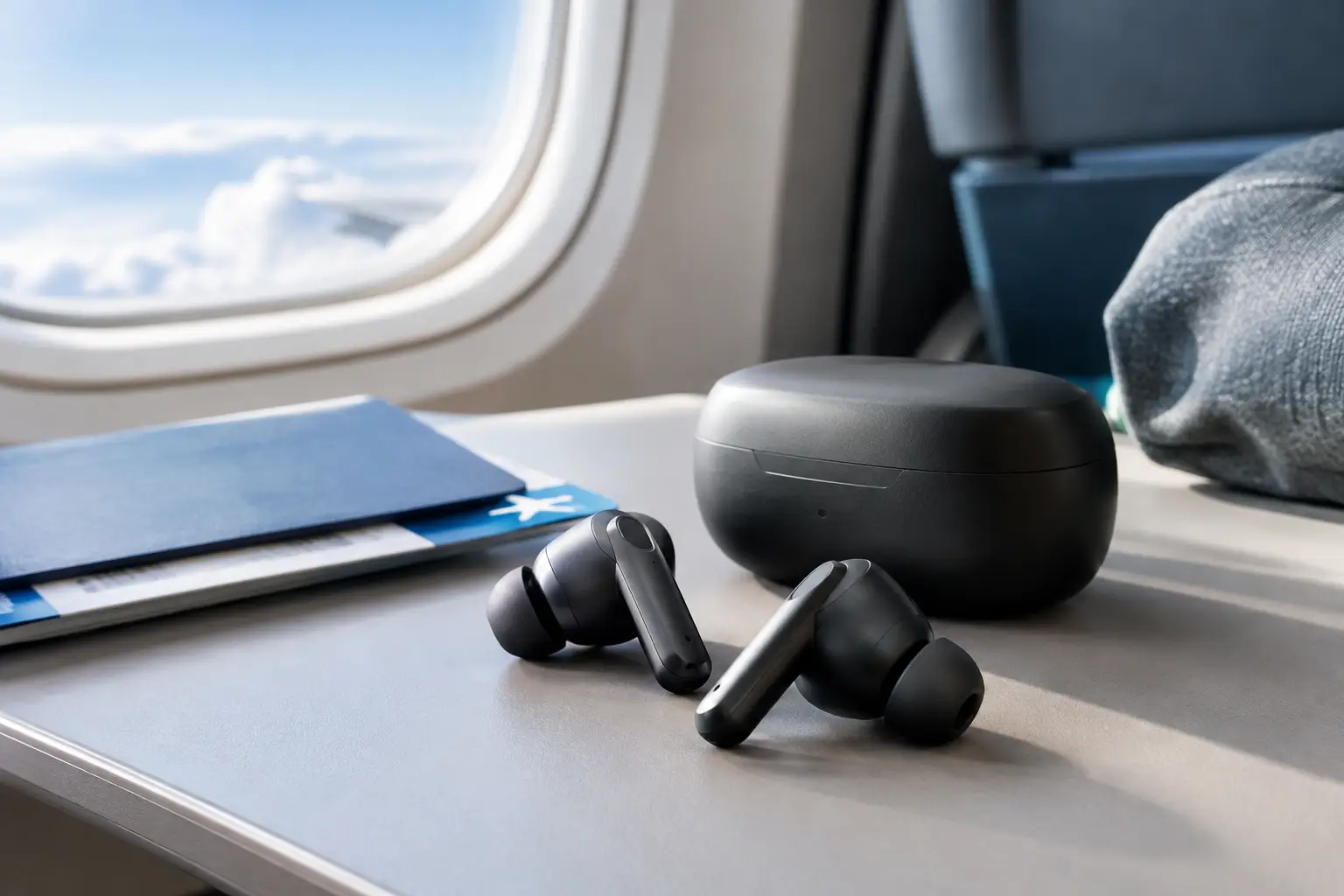
A loud aircraft cabin can turn a three-hour flight into lost work time, a strained podcast session, or a nap that never quite happens. The best travel noise cancelling earbuds do more than mute engine rumble. They fit securely through a rushed terminal, handle calls in a hotel lobby, survive a full day away from an outlet, and stay comfortable when you have nowhere else to put them.
For frequent travelers, the right choice is less about finding the biggest spec sheet and more about matching the earbud to the travel system. A long-haul traveler needs serious low-frequency noise reduction and fatigue-free fit. A carry-on-only business traveler may care more about multipoint pairing and call quality. An iPhone-centered traveler will get real value from Apple integration, while Android users have better options than forcing themselves into that ecosystem.
The best travel noise cancelling earbuds at a glance
The Bose QuietComfort Ultra Earbuds are the strongest overall pick for travelers who prioritize active noise cancellation above everything else. Sony’s WF-1000XM5 are the better all-around choice for travelers who also want detailed sound, compact hardware, and deep app controls. AirPods Pro 2 remain the practical default for iPhone users because their switching, transparency mode, and Find My support remove friction from the trip.
Technics’ AZ100 earbuds deserve attention for travelers who take calls in noisy places and want a more refined sound profile. Jabra Elite 8 Active Gen 2 are the sensible option for travelers whose itinerary includes a hotel gym, rainy walking tours, or beach days. None of these is perfect for every person. The right purchase depends on the parts of travel that usually irritate you.
What makes earbuds good on a plane
Airplane noise is not one sound. It is a persistent mix of low engine rumble, ventilation, vibration, passenger chatter, and the sharp interruptions of announcements and service carts. Most earbuds advertise noise cancellation. The meaningful difference is how well they reduce that low, steady rumble without producing uncomfortable pressure or unstable audio.
Bose has remained a leader here because its QuietComfort line makes the cabin feel materially calmer, not merely quieter around the edges. The QuietComfort Ultra Earbuds are especially strong for travelers who fly often, use audio to work, and want to arrive less drained. Their trade-off is size. The charging case is not the smallest in the category, and the earbuds are less discreet than Sony’s.
Sony WF-1000XM5 earbuds strike a better balance for many people. Their noise cancellation is excellent, their case slips easily into a tech pouch, and the sound has enough warmth and definition for music, movies, and spoken-word audio. Sony also gives power users extensive equalizer and ambient-mode controls. That flexibility is useful, though it can become another small setup task before a trip.
The lesson is simple: do not judge travel earbuds only by silence. Judge them by whether they make the environment easier to manage for several uninterrupted hours.
Best picks for different travel workflows
Bose QuietComfort Ultra Earbuds for long-haul flights
Choose Bose if your primary mission is reducing airplane fatigue. These are built for the traveler who books the window seat, loads a long playlist, and wants the cabin to recede. They also deliver immersive spatial processing, although that feature matters far less than the noise cancellation when you are crossing an ocean.
The fit is secure for many users, but ears are highly individual. Test the included tips at home before departure. Poor fit does not just hurt comfort. It reduces bass response and makes active noise cancellation less effective.
Sony WF-1000XM5 for the one-bag tech setup
Sony’s WF-1000XM5 are a high-value pick for travelers who carry a laptop, switch between entertainment and work, and prefer control over automatic behavior. The smaller physical profile is valuable when every pocket and pouch has a job. Their audio tuning is engaging without becoming exhausting, which matters on long listening days.
Call performance is solid, but windy streets and crowded terminals can challenge any compact earbud microphone. If your work requires polished calls from unpredictable places, use earbuds as a backup rather than your only meeting tool.
AirPods Pro 2 for iPhone travelers
AirPods Pro 2 are not necessarily the absolute leaders in airplane noise reduction, but they may be the best travel purchase for people deeply invested in Apple hardware. Pairing is immediate. Device switching is generally painless. Transparency mode is unusually natural for gate announcements, hotel check-in, and quick conversations with a flight attendant.
The practical advantage is behavioral. Travelers are more likely to use a feature when it requires no setup. AirPods Pro 2 also offer strong location tracking through Apple’s ecosystem, a meaningful hedge against losing one bud beneath an airplane seat.
Technics AZ100 for calls and sound quality
Technics AZ100 earbuds are worth shortlisting if your travel includes client calls, remote interviews, or long stretches of music listening. They combine capable adaptive cancellation with clear voice handling and a more spacious, controlled presentation than many bass-forward competitors.
They make the most sense for someone who wants a premium general-purpose earbud, not only a flight accessory. If pure cabin hush is the only metric, Bose is still the more direct answer.
Jabra Elite 8 Active Gen 2 for mixed itineraries
City breaks are often harder on gear than airport-to-hotel business trips. Sweat, rain, long walks, and a rushed workout expose the weakness of fragile earbuds. Jabra Elite 8 Active Gen 2 are a smart fit for travelers who need tougher hardware and a stable fit without carrying separate gym headphones.
Their noise cancellation is competitive, though not the category benchmark. Buy them for durability and versatility, not because you expect Bose-level isolation at 35,000 feet.
The buying details that prevent regret
Battery claims need context. Manufacturers typically quote the longest number with noise cancellation off, moderate volume, and ideal conditions. For travel, focus on real working endurance with cancellation on. Around five to seven hours per charge is generally enough for a domestic flight or a long work block. For longer routes, the case matters more. You need enough stored power to recharge during a layover without hunting for a wall outlet.
Multipoint connectivity is another feature that sounds minor until it saves a call. Travelers often move between a phone and a laptop, then need to take a call without digging through Bluetooth menus. Sony and Technics are strong candidates for multi-device workflows. Apple users should prioritize Apple integration instead of generic multipoint claims because their devices already coordinate differently.
Do not overlook transparency mode. Great noise cancellation is useful at cruising altitude. Great transparency is useful everywhere else. You need to hear boarding changes, answer a cashier, and navigate a station without removing an earbud and risking a loss. This is one reason AirPods Pro 2 remain so compelling for iPhone users.
Fit is the non-negotiable variable. A premium pair that aches after 45 minutes is not premium for travel. Test earbuds during a full work session, a walk, and at least one call before the return window closes. Try every included ear tip. If the brand offers foam tips, consider them for flights, but remember that foam can wear faster and needs regular replacement.
A simple travel setup that works
Set up your earbuds before packing day. Update firmware, download the companion app if it adds meaningful controls, and create one noise-cancelling mode for flights and one ambient mode for airports. If the earbuds support an ear-fit test, run it. This takes minutes at home and prevents fiddling with settings while your boarding group is called.
Put the charging case in the same small pouch as your passport backup card, cable, and power bank. That system matters because loose earbuds are easy to misplace. For overnight flights, keep the case accessible in the seat pocket or personal item, not buried in the overhead bin.
The smartest purchase is the pair you will actually wear from terminal to arrival. Pick the Bose QuietComfort Ultra Earbuds if quiet is the priority, Sony WF-1000XM5 if you want the most balanced tech setup, or AirPods Pro 2 if your iPhone is already the center of your travel workflow. A calmer cabin is useful, but a device that removes friction across the entire trip is what earns a permanent spot in your carry-on.