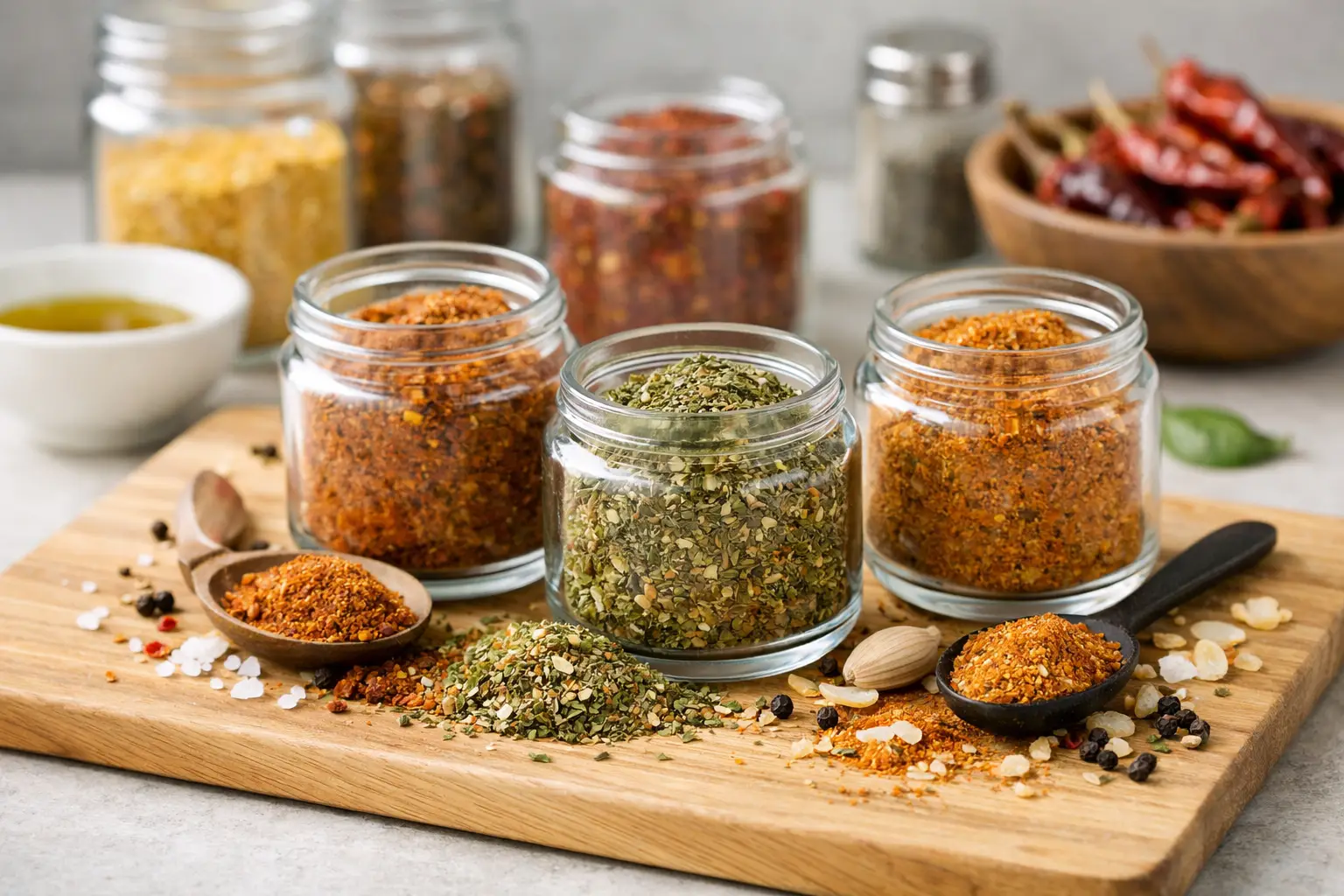
A cluttered spice cabinet slows down good cooking more than most home cooks admit. You reach for cumin, then paprika, then garlic powder, then realize your chili flakes are stale and your smoked salt has fused into a brick. Homemade spice blends fix that problem fast. They are not just a flavor upgrade. They are a kitchen systems upgrade.
For advanced home cooks, the value is consistency under pressure. If you cook three to five nights a week, host often, or batch-prep proteins and vegetables on Sunday, pre-mixed seasoning is one of the cheapest workflow improvements you can make. The key is treating blends like mise en place, not like a cute pantry project.
Why homemade spice blends work better in real kitchens
Store-bought blends are convenient, but they often fail on two fronts. First, they lean too hard on salt, which makes them less flexible across proteins, vegetables, and sauces. Second, they are built for shelf life and mass appeal, not for your stove, your cookware, or your heat tolerance.
Homemade spice blends give you control over salt level, sugar level, texture, and aroma. That matters if you sear in cast iron, grill hot and fast, roast at high volume, or finish dishes with compound butter or pan sauces. A coarse blend behaves differently from a fine one. A blend heavy on dried herbs can scorch in a ripping hot skillet, while one built around toasted ground chiles and coriander can handle direct heat far better.
There is also the cost argument. Buying whole or core ground spices and building a small rotation of blends usually costs less per use than constantly replacing branded jars. The trade-off is shelf management. If you make too many blends or make them in oversized batches, you create your own stale inventory problem.
Build a homemade spice blends system, not a collection
Most people go wrong by making ten blends they use once. A better system starts with your actual cooking patterns. Look at your last two weeks of dinners. If your regular rotation includes chicken thighs, roasted vegetables, ground turkey, rice bowls, eggs, and one grilled meal on weekends, you probably need only three or four blends.
That is the operating principle: build for repetition.
Start with your core use cases
A strong home setup usually includes one all-purpose savory blend, one high-heat blend for roasting or grilling, one herb-forward blend for lighter proteins and vegetables, and one regional profile you reach for constantly, like taco, shawarma, curry, or barbecue. If you cook broadly, that fourth slot is where personality lives. The first three should carry most of the workload.
This keeps the cabinet clean and makes labeling easier. It also reduces decision fatigue, which is a real issue on weeknights. If every protein needs a fresh spice strategy, cooking becomes slower than it needs to be.
Keep salt separate when possible
This is one of the smartest upgrades you can make. Unsalted or lightly salted blends are more versatile because they let you season based on cooking method. A dry-brined chicken breast, a quick sauté of mushrooms, and a sheet pan of potatoes all need different salt handling. If the blend is already loaded with salt, you lose control.
There are exceptions. A dedicated barbecue rub or popcorn blend can make sense with salt included because the use case is narrow and predictable. For general-purpose blends, separate salt is the cleaner system.
Mix in small batches
Freshness drops faster than people think, especially once spices are ground and exposed to air. A practical batch size is enough for two to six weeks of normal cooking. That usually means half a cup to one cup per blend, depending on how often you use it.
This is where discipline beats enthusiasm. A giant mason jar of house seasoning looks good on a counter. It is a mediocre strategy if the bottom half tastes flat by month three.
The equipment that makes spice blending efficient
You do not need a culinary lab, but a few tools matter. A dedicated coffee grinder or spice grinder is the obvious one if you buy whole spices. It gives you stronger aroma, better control over texture, and lower long-term cost. Mortar and pestle works too, but it is slower and less consistent for larger batches.
A small digital scale is even more useful than measuring spoons once you start refining blends. Weight-based formulas make repeatability easy, especially if you tweak heat or sweetness over time. If a blend comes out perfect, you want a system that lets you reproduce it exactly.
Glass jars with airtight lids are worth using, but size matters. Smaller containers reduce air exposure and force you to keep batch sizes realistic. Clear jars are fine if they live in a dark cabinet. If they sit near light or heat, flavor degradation speeds up.
A simple label system is non-negotiable. Name, date mixed, and a quick note such as “best for chicken and potatoes” is enough. That sounds fussy until you have three red blends in similar jars and no memory of which one contains brown sugar.
Four homemade spice blends worth keeping on rotation
A reliable all-purpose savory blend should handle eggs, chicken, roasted potatoes, and sautéed vegetables without overpowering anything. Think garlic powder, onion powder, black pepper, paprika, mustard powder, and a small amount of celery seed or ground coriander. This is your weekday workhorse.
A high-heat roast and grill blend needs to avoid delicate dried herbs that burn early. Paprika, cumin, coriander, black pepper, chile powder, and a touch of granulated garlic work better here. If you want sweetness, keep it low. Sugar burns quickly, especially under broiler or grill heat.
An herb-forward blend is useful for fish, chicken cutlets, white beans, and vegetables like zucchini or cauliflower. Dried oregano, thyme, dill, lemon peel, garlic, and white pepper build a cleaner profile. This one shines when finished with olive oil or a squeeze of citrus.
A regional anchor blend depends on your cooking style, but shawarma is a strong candidate because it works across chicken, lamb, chickpeas, and roasted carrots. Cumin, coriander, paprika, turmeric, cinnamon, allspice, and black pepper create depth without making every meal taste the same.
The point is not novelty. The point is having a tight group of blends that solve dinner repeatedly.
Common mistakes that make blends taste flat
The biggest mistake is using old spices and expecting fresh results. If your ground cumin has been sitting open for two years, no ratio will save it. Whole spices last longer and are usually the smarter buy if you cook often enough to justify grinding.
The second mistake is copying ratios without testing on actual food. A blend can smell great in the jar and disappear on roasted vegetables. Another can seem balanced dry and then turn bitter in a pan. Heat changes everything. Fat changes everything. A proper test means cooking with it, not just tasting it on your fingertip.
The third mistake is overloading a blend with too many competing notes. If every jar contains smoked paprika, chipotle, cumin, oregano, fennel, cinnamon, mustard, five herbs, and sugar, your cabinet starts producing variations of the same muddy flavor. Restraint gives you range.
How to integrate blends into a faster weekly cooking workflow
The best use of homemade spice blends is upstream. Season proteins before they hit the pan. Toss vegetables in oil and spice while the oven preheats. Mix a spoonful into yogurt, mayo, or softened butter to create instant sauces and finishing spreads.
This is where the time savings become real. A chicken thigh dinner gets easier when one measured blend can season the meat, coat the potatoes, and flavor a quick pan sauce with stock and butter. A bowl meal moves faster when the same spice base runs through the rice, roasted vegetables, and ground turkey. One blend, multiple touchpoints, less friction.
Batch cooking benefits even more. If you prep a tray of vegetables, a pot of grains, and two proteins for the week, distinct spice blends create variety without requiring separate recipes. You are not cooking four dinners on Sunday. You are building interchangeable components.
That is the systems mindset NawaMag readers tend to appreciate. Better outputs usually come from fewer decisions, cleaner tools, and repeatable inputs.
When store-bought still makes sense
Not every blend needs to be homemade. If a producer makes an excellent garam masala, za’atar, or regional mix with fresh turnover and balanced ingredients, buying it can be smarter than sourcing eight components yourself. Time matters. Pantry space matters.
The useful distinction is this: make the blends you use heavily and tweak constantly. Buy the ones tied to occasional specialty cooking or ingredients you do not want sitting around. There is no prize for making every seasoning from scratch if half the jars go stale.
A better spice cabinet is not about more ambition. It is about fewer weak points between you and a good meal. Start with two homemade spice blends you know you will use this week, label them properly, and let your kitchen prove what deserves a permanent spot.