A cramped kitchen usually fails in the same predictable places. The prep zone gets buried under appliances, the drawer with tools becomes a metal junk pile, and the cabinet under the sink turns into a black hole of spray bottles and half-used sponges. The best small kitchen organization ideas fix workflow first, not just appearance.
If you cook often, especially with a semi-serious setup, your kitchen does not need more random organizers. It needs a tighter system. That means placing tools by task, reducing duplicate gear, and using vertical and hidden space with intent. A small kitchen can perform well, but only if every shelf, drawer, and countertop earns its footprint.
Small kitchen organization ideas start with zones
Most small kitchens feel chaotic because everything is stored by category instead of by use. Mugs live with plates, cutting boards hide near bakeware, and oils end up across the room from the stove. That arrangement looks logical on paper, but it slows down cooking and creates extra movement in a room that already has no spare space.
A better system is zoning. Keep prep tools together, cooking tools near heat, dishes near the dishwasher or drying rack, and cleaning supplies where reset happens fastest. This sounds obvious until you audit your kitchen and notice that your most-used knife is three steps from your cutting board, while your least-used serving platter gets prime real estate.
In practical terms, the prep zone should hold knives, cutting boards, mixing bowls, peelers, and the tools you reach for daily. The cook zone should hold oils, salt, pepper, spatulas, tongs, and pot lids. Your reset zone should include dish soap, towels, trash bags, and food storage containers. Once these zones are clean, organizing gets easier because every object has a job and a location.
Stop letting the counter become storage
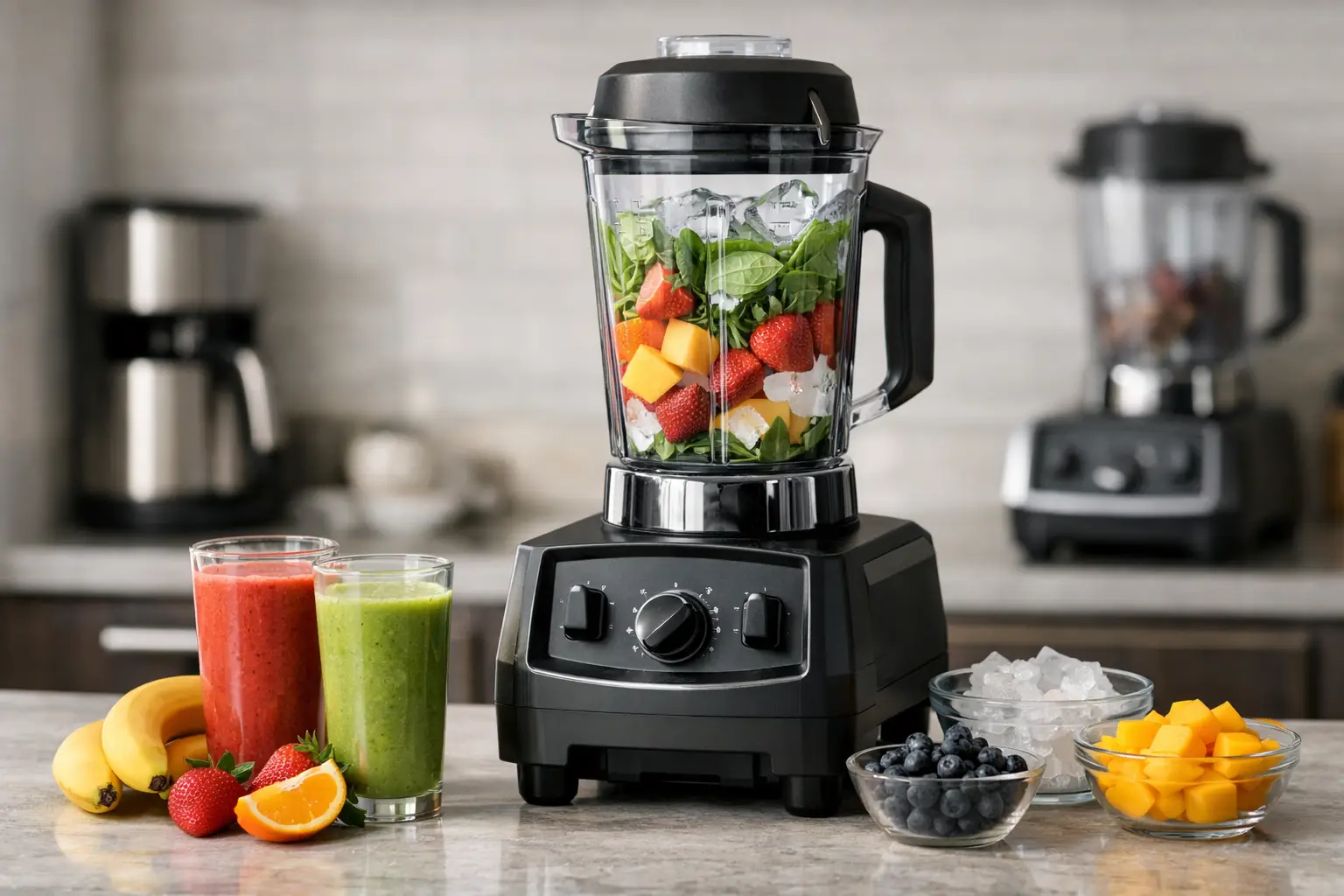
Small kitchens break down when countertops turn into permanent parking lots. The toaster stays out, the blender never gets put away, the utensil crock expands, and suddenly your usable prep area shrinks to the size of a placemat.
The rule is simple. Only daily-use items stay on the counter, and only if they support your actual cooking rhythm. A coffee setup may deserve a dedicated corner. A stand mixer used twice a year does not. If you need to move an appliance before you can chop an onion, the counter is overcommitted.
This is where appliance tiering helps. Keep daily appliances accessible, weekly appliances on an easy shelf, and occasional appliances higher up or outside the kitchen if necessary. There is a trade-off here. Storing everything out of sight makes the room look cleaner, but if your storage solution adds friction, you will stop using the tool. The right answer depends on frequency, not aesthetics.
Use vertical space like a systems designer
In compact kitchens, unused height is wasted capacity. Most cabinets have dead air above stacks of bowls, and most walls have at least one section that could carry more load. Good small kitchen organization ideas almost always involve building upward.
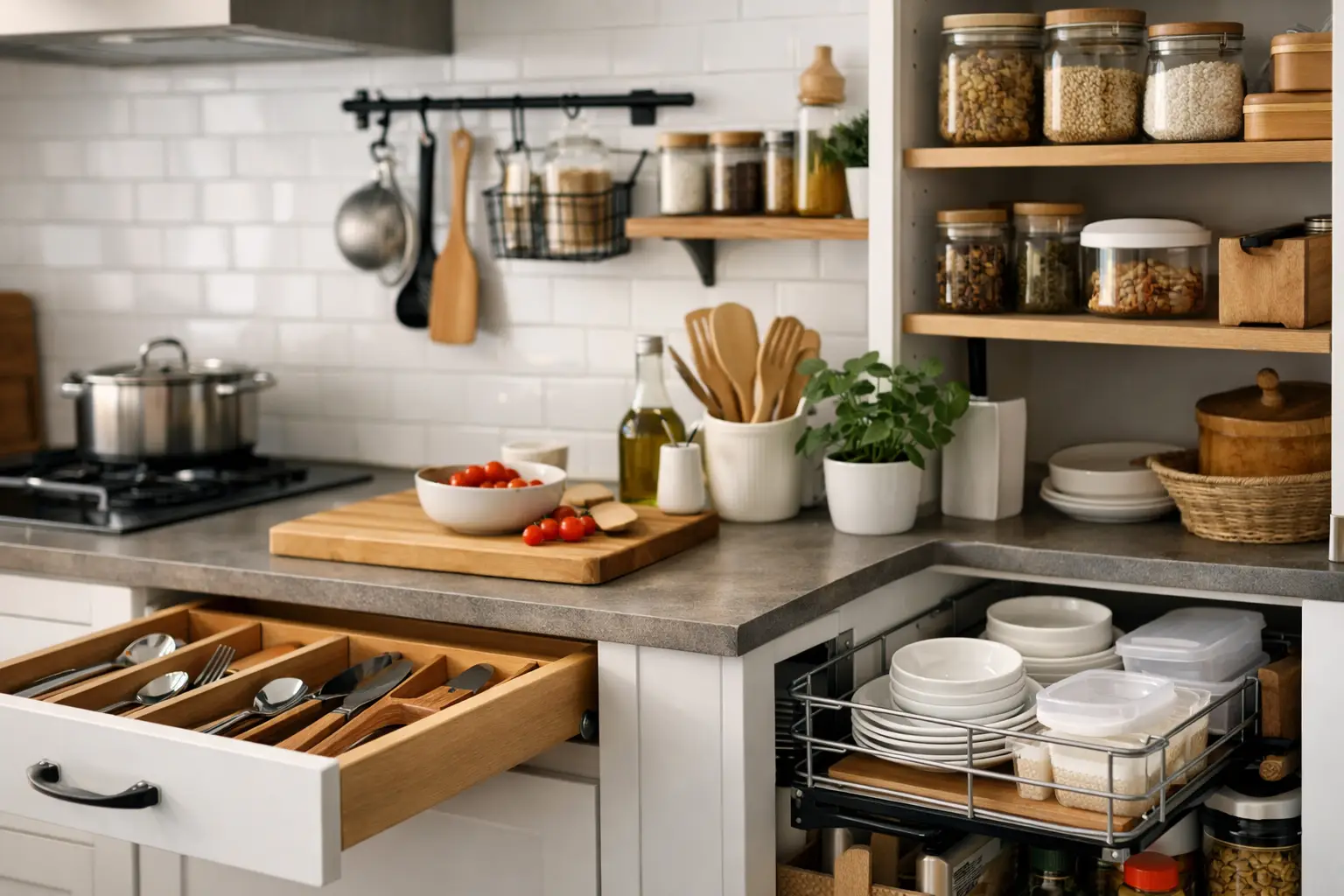
Shelf risers are one of the rare cheap upgrades that actually change daily function. They split a tall cabinet into usable layers so mugs, plates, and pantry goods are not stacked in unstable towers. Cabinet door organizers can hold wraps, cutting mats, or cleaning items without taking prime shelf space. Magnetic strips for knives or metal spice tins free up drawers and keep key tools visible.
Open shelving can help, but only if you are disciplined. It is excellent for attractive, high-frequency items like everyday bowls, glasses, or labeled dry goods. It is terrible for visual clutter. If your kitchen already feels busy, adding exposed storage may make it feel smaller. Closed storage is usually better for households that want calm more than display.
The back of the cabinet matters
Deep cabinets create false abundance. You think you have storage, but the back half becomes archaeological storage for things you forgot you owned. Pull-out bins, turntables, and clear containers solve this because they bring the back row forward.
This matters most in pantry cabinets and under-sink areas. A lazy Susan for oils, vinegars, or sauces prevents bottle traffic jams. Narrow pull-out bins can group snacks, baking supplies, or breakfast items into grab-and-go modules. The goal is not container perfection. The goal is retrieval speed.
Drawers need constraints, not hope
The average kitchen drawer becomes messy because it is expected to hold too many object types at once. Measuring spoons slide under can openers, bag clips tangle with thermometers, and the drawer starts resisting every attempt to open smoothly.
Drawer inserts fix part of that, but the bigger move is reducing category drift. One drawer for prep tools. One for eating utensils. One for wraps and storage accessories if needed. If your kitchen is too small for that many dedicated drawers, use bins inside the drawer so categories remain separated.
Long, narrow tools are another common problem. Tongs, spatulas, whisks, and chopsticks can create horizontal chaos. Expanding drawer dividers help, but so does ruthless editing. If you own six spatulas and use two, the organization problem is not the drawer. It is your inventory.
Your junk drawer is probably a kitchen tax
Most homes keep a junk drawer because there is no system for overflow objects. Batteries, rubber bands, takeout menus, random screws, pens. In a small kitchen, that drawer taxes valuable space.
If you need a utility drawer, keep it tight and deliberate. Use small trays, cap the number of non-kitchen items, and remove anything that belongs in a desk, toolbox, or hallway console. A compact kitchen cannot subsidize general household clutter.
Pantry organization should reduce decisions
Pantries fail when they are optimized for bulk buying without a plan for access. Bags get folded shut badly, cans disappear behind pasta boxes, and you rebuy ingredients you already own. Smart pantry organization is less about visual uniformity and more about reducing friction at meal time.
Group food by behavior. Breakfast items together. Weeknight cooking staples together. Baking ingredients together. Grab-and-go snacks together. This setup mirrors decisions you actually make instead of forcing you to scan every shelf when hungry or rushed.
Decanting can help, but it is not mandatory. Clear containers work best for high-turnover dry goods like rice, oats, flour, or cereal. They stack well and make inventory visible. For niche ingredients you use monthly, the original packaging is usually fine. Over-organizing low-use items creates maintenance work that rarely pays off.
Make the sink zone boring and efficient
The area around the sink often becomes a magnet for visual noise. Soap bottles, scrubbers, drying mats, hand soap, extra sponges, and mail somehow all meet there. In a small kitchen, this zone should be brutally simple.
Keep only current-use cleaning tools near the sink. Extra stock goes elsewhere. Use a small tray or caddy so soap and scrubbers live within a defined boundary instead of spreading across the counter edge. If you hand-wash often, a roll-up drying rack over the sink can create temporary surface area without permanently consuming space.
Under the sink deserves the same discipline. Use one bin for dish supplies, one for backup products, and one narrow area for trash bags or dishwasher tablets. Avoid loose storage. The pipes already make this cabinet awkward. Random placement makes it worse.
Turn awkward gaps into working storage
Some of the best storage in a small kitchen hides in the spaces people ignore. The few inches beside the fridge, the side of a cabinet, the inside of a pantry door, or the wall above a backsplash can all carry useful load.
Slim rolling carts are strong solutions for narrow gaps, especially for oils, canned goods, or cleaning supplies. Hooks on cabinet sides can hold towels or lightweight tools. A mounted rail with hooks can replace a countertop utensil holder and free prep space. Even the top of the fridge can work for low-frequency storage, though it is better for lightweight bins than everyday essentials.
There is a limit, though. If every surface starts carrying something, the room feels tactical in the wrong way. Use overlooked space to support function, not to justify keeping too much.
Edit your kitchen like a professional line setup
Professional kitchens stay fast because they do not keep sentimental clutter at arm’s reach. Home kitchens often do the opposite. Duplicate tools, novelty gadgets, oversized water bottles, chipped mugs, and storage containers without matching lids quietly eat capacity.
A small kitchen organization reset usually improves most after subtraction. Keep the pan you use three times a week. Reconsider the appliance you pull out twice a year. Keep a realistic number of food containers, mugs, and utensils for your household, plus a little margin. Beyond that, extra inventory adds drag.
This is the part many people skip because buying organizers feels more productive than editing possessions. But storage products should support a lean system, not compensate for unchecked accumulation. If NawaMag has a bias here, it is toward performance. Your kitchen should run cleanly on a busy Tuesday night, not just look tidy for ten minutes after a reset.
Small kitchen organization ideas that actually last
The systems that hold are the ones with low maintenance. Labels help if multiple people use the space. Clear bins help if they prevent duplicate purchases. A weekly five-minute reset helps because small mess compounds fast in tight rooms.
What lasts is not perfection. It is alignment between space, habits, and cooking style. If you cook daily, prioritize speed and access. If you mostly reheat and assemble meals, give less room to cookware and more to pantry flow. Organizing a small kitchen well is less about making it look bigger and more about making it think faster.
The smartest upgrade is not another container. It is deciding that every inch should support the way you actually live, not the fantasy version of your kitchen you were sold.