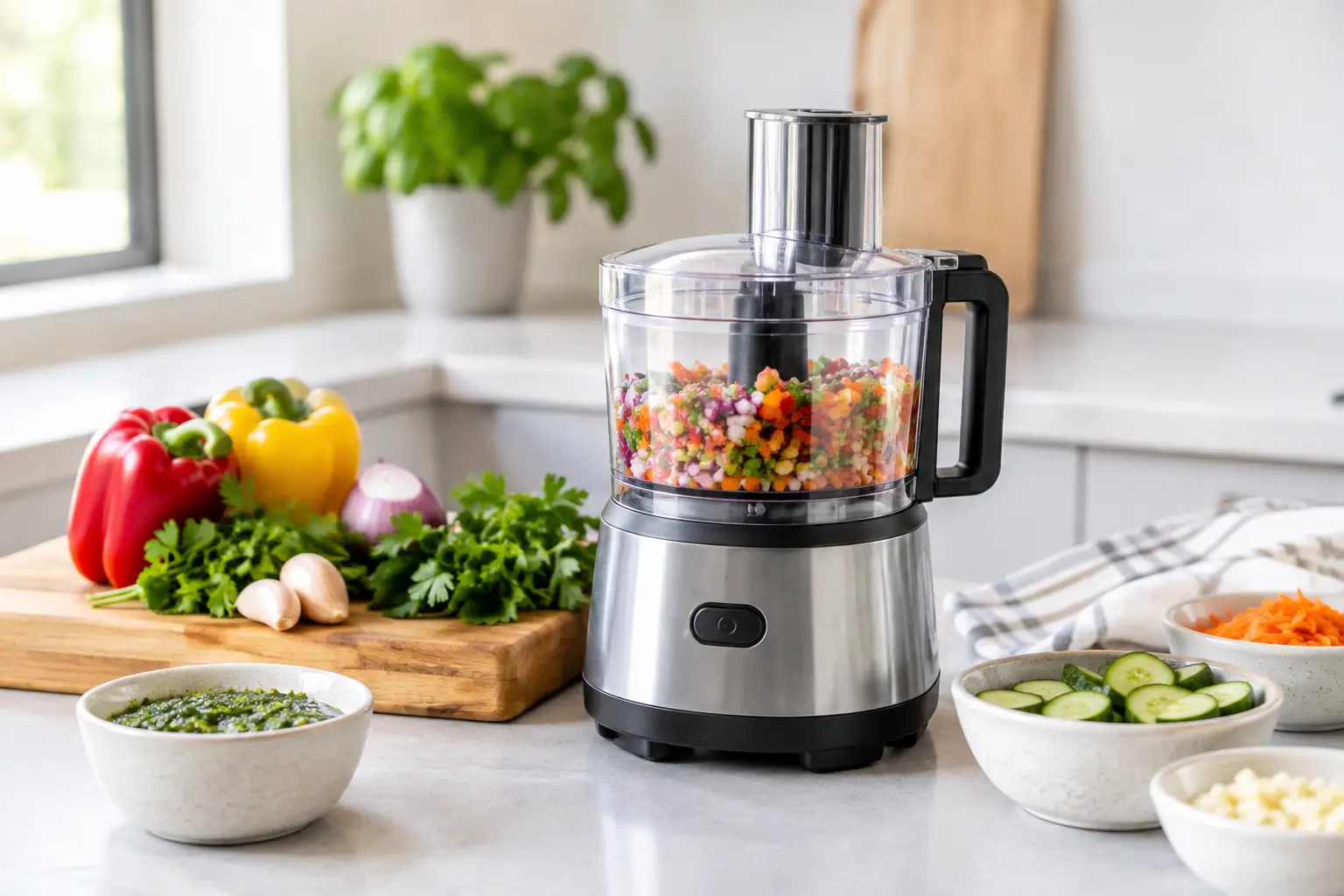
A compact processor earns its counter space when it eliminates the prep task you avoid at 6:30 p.m.: chopping an onion, shredding carrots, turning stale bread into crumbs, or building a quick sauce without pulling out a full-size machine. The best compact food processors are not simply the smallest models. They are the ones that match your batch size, storage limits, and actual cooking rhythm.
That distinction matters because many small appliances disappoint for predictable reasons. A tiny chopper cannot grate a block of cheese. A 9-cup machine may be technically compact, but still feel oversized in a galley kitchen. And a model with too many loose parts can create more cleanup friction than it removes. Buy for the workflow, not for the product category.
What Makes a Compact Food Processor Worth Buying
Start with capacity, but do not treat it as a status metric. A 3- to 4-cup model is a prep specialist for one or two people. It handles aromatics, nuts, herbs, dressings, pesto, and small amounts of breadcrumbs. It will not replace a processor with a feed tube and shredding disc.
The 7- to 8-cup range is the practical center for most households. These machines can handle weekly prep, pie dough for a single crust, grated vegetables for slaw, and enough sauce to serve a family. They are still realistic to store in a lower cabinet or leave at one end of the counter.
The 9-cup category is the upper edge of compact. Choose it when you cook in batches or regularly prep for three to five people, but cannot justify a large professional-style unit. At this size, vertical storage, cord management, and nested accessories matter almost as much as the bowl capacity.
Motor wattage is useful only in context. A well-designed blade and stable bowl matter more than chasing the largest number on the box. For everyday work, look instead at whether the machine stays planted during nut chopping, whether the feed tube accommodates your usual produce, and whether blade, disc, and lid are simple enough to clean immediately.
The Best Compact Food Processors by Kitchen Workflow
These picks are fit-based recommendations, not a universal ranking. The right choice depends on whether your bottleneck is tiny prep, weekday volume, or frequent grating and slicing.
1. Cuisinart Mini-Prep Plus: Best for Fast, Small-Batch Prep
The Cuisinart Mini-Prep Plus is the classic answer for cooks who need a reliable 3-cup chopper rather than a miniature version of a full food processor. Its reversible blade is designed to chop and grind, making it useful for garlic, onions, herbs, toasted nuts, breadcrumbs, and small portions of sauce.
Its limitation is also its value proposition. There is no feed tube, slicing disc, or shredding disc, so it cannot run big vegetable-prep jobs. If you cook mostly for one or two and want to reduce repetitive knife work, it is one of the most efficient appliances you can own. Keep it near the cutting board, not buried in a high cabinet.
2. KitchenAid 3.5 Cup Food Chopper: Best for Dressings and Sauces
KitchenAid’s 3.5-cup food chopper is built around controlled small-batch work. The drizzle basin is especially useful for emulsions such as vinaigrettes, aioli, green sauce, and mayonnaise, where adding oil gradually produces a better texture than dumping everything into the bowl at once.
This is a smart choice for cooks who already have good knife skills but want sauces and flavor bases to happen faster. It is less convincing for dry, high-volume jobs like grating cheese or processing large amounts of vegetables. Think of it as a sauce station with chopping ability, not a do-everything machine.
3. Cuisinart Elemental 8-Cup: Best All-Around Compact Processor
The Cuisinart Elemental 8-Cup is the strongest fit for the buyer who wants one compact appliance to cover several tasks. Its size is manageable, yet it has the workflow tools that distinguish a true food processor from a chopper: a feed tube, slicing and shredding capability, and enough bowl capacity for real dinner prep.
This is the machine to consider if taco-night slaw, shredded cheese, cauliflower rice, pastry dough, and hummus all happen in your kitchen. The trade-off is that an 8-cup processor takes more cabinet space and has more components to wash. For households that use those discs weekly, that extra complexity is justified.
4. KitchenAid 7-Cup Food Processor: Best for Organized Storage
The KitchenAid 7-Cup Food Processor makes sense for people who hate accessory sprawl. Its system is designed so the blade and discs can store inside the work bowl, which is a practical advantage in kitchens where every drawer already has a job.
Capacity is sufficient for most weekday cooking, and the format is approachable for people graduating from a mini chopper. It is particularly good for an organized home cook who needs slicing and shredding without committing to a large, heavy machine. If you regularly make double batches of dough or meal prep for the week, step up in capacity instead.
5. Hamilton Beach Stack & Snap 8-Cup: Best for Low-Friction Setup
Hamilton Beach’s Stack & Snap 8-Cup models solve one common annoyance: the fussy alignment process found on many processors. The bowl design reduces the need to twist and lock components into place, which can make a measurable difference when you are cooking quickly or dealing with limited hand strength.
It is a value-focused option for straightforward slicing, shredding, chopping, and pureeing. Expect a less premium feel than higher-priced machines, and check the included disc configuration before buying because packages can differ. For a practical household that wants less setup drama, the design is compelling.
6. Ninja Professional Plus 9-Cup: Best Compact Option for Bigger Batches
The Ninja Professional Plus 9-Cup sits at the compact category’s upper limit, but it offers meaningful capacity without moving into the large 12- to 14-cup class. It is a strong choice for families that make larger batches of salsa, hummus, chopped vegetables, or dough, and need more throughput than a 7-cup bowl provides.
The price of that capacity is a taller, more substantial machine. Measure under your cabinets before committing, especially if you plan to leave it on the counter. This is not the right purchase for a studio apartment with minimal storage. It is the right one for a busy kitchen that has outgrown a mini chopper but still needs a contained footprint.
Build the Right Processor Setup, Not a Gadget Collection
A common purchasing mistake is buying both a small chopper and an 8-cup processor before understanding the overlap. For most people, one machine is enough. Choose a 3- or 4-cup chopper if your pain point is flavor prep. Choose a 7- or 8-cup processor if the pain point is vegetable volume and disc-based work.
There is one exception: frequent cooks with a small kitchen can justify a two-machine system. A compact chopper can live in an accessible cabinet for daily aromatics and sauces, while a mid-size processor handles weekly grating, dough, and batch prep. That setup prevents the larger machine from becoming a neglected, inconvenient purchase.
Before ordering, run a quick audit of the last ten meals you cooked. Count how often you chopped onions, made sauce, shredded vegetables, grated cheese, or made dough. Your most repeated task should decide the machine. A processor is a prep system, and the best system is the one you will use before the vegetables wilt in the crisper drawer.
Small Details That Change Daily Use
Do not overlook lid and bowl design. A wide feed tube saves prep time because you can process larger pieces of potato, cucumber, or zucchini. A narrow tube creates more uniform slices, but requires more cutting before the machine does any work. Neither is inherently better. Pick based on whether speed or visual consistency matters more in your cooking.
Also consider cleanup timing. Food processors are easiest to wash immediately after use, before cheese dries on a shredding disc or nut butter settles under the blade. If your kitchen workflow tends toward delayed cleanup, favor a simpler chopper or a machine with fewer parts. The best appliance is not the one with the longest feature list. It is the one that removes friction from the meals you actually make.
Give the processor a defined role, a defined storage spot, and a cleaning routine. Once those three decisions are made, it stops being another countertop promise and starts paying back time every week.