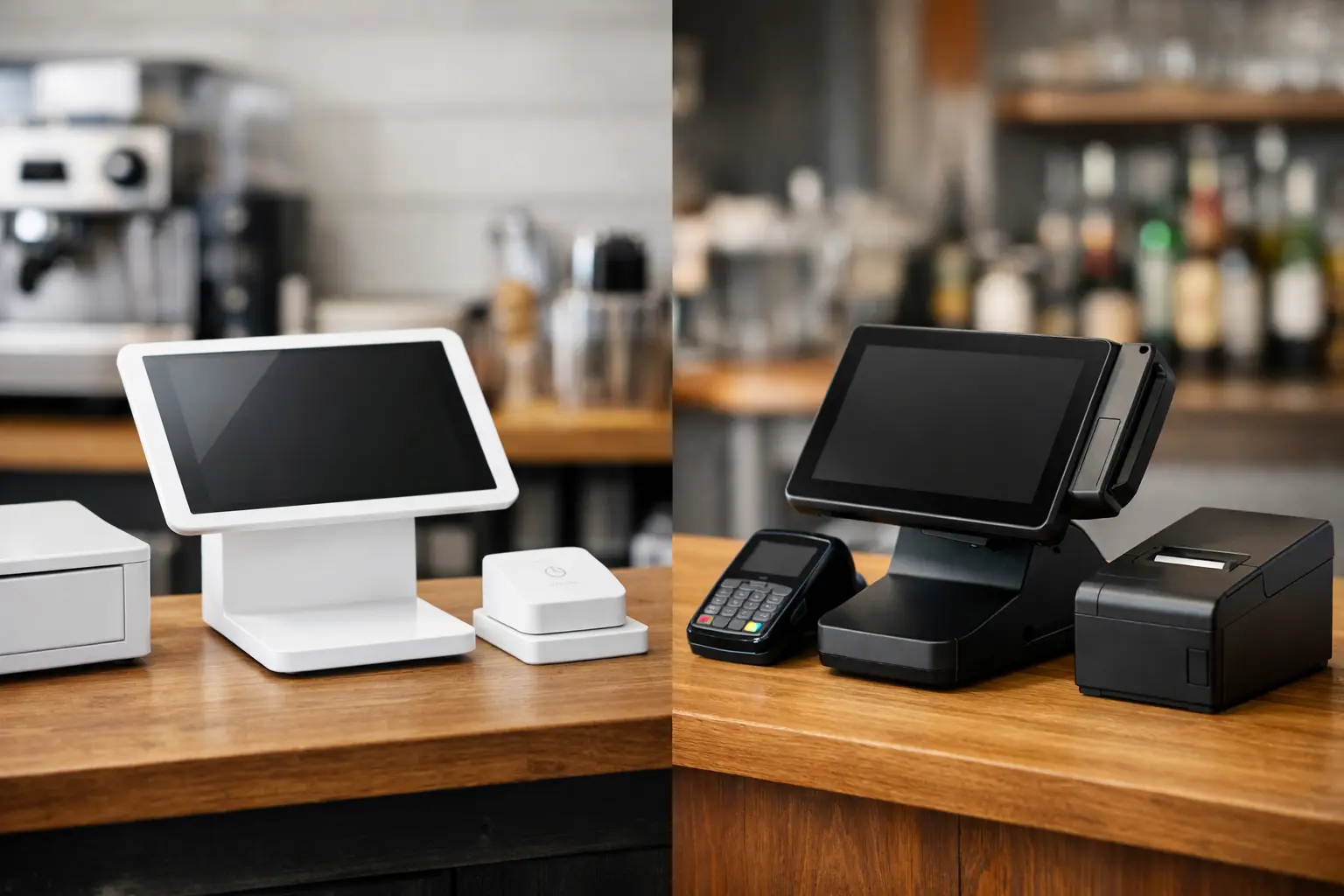
A point-of-sale system becomes visible only when it fails: a lunch rush backs up because modifiers print incorrectly, a manager cannot close a drawer, or a server is hunting for a split check while a line forms at the door. That is the real frame for a Square vs Toast POS decision. This is not a contest between two payment terminals. It is a choice between two operating models.
Square is built to get a business selling quickly, with a familiar interface and a broad set of tools that can stretch across retail, services, cafes, and simple food concepts. Toast is built around the specific friction of running a restaurant, where orders move through stations, tickets change constantly, labor moves by the hour, and the kitchen is the center of the operation.
For a single-counter coffee bar, the difference may feel modest. For a full-service restaurant with a bar, patio, online ordering, multiple prep stations, and nightly tip workflows, it becomes structural.
Square vs Toast POS at the workflow level
The better system is the one that removes steps from the busiest, most error-prone part of your service. Start there, not with the monthly software price.
Square works best when the transaction is the core event. A customer orders at a counter, pays immediately, receives a simple receipt, and leaves. Think coffee shops, bakeries, quick-service counters, market stalls, compact wine bars, and small operators that sell both food and merchandise. The setup is generally approachable, and the system can be running without a long implementation project.
Toast is strongest when the order must travel. A guest orders an appetizer, changes an entree, adds a modifier, sends a second round from the bar, then splits the check three ways. The ticket needs to be understood by a server, bartender, expo, grill station, and manager without creating a pile of handwritten workarounds. Toast is designed around that chain of custody.
This distinction matters because operational complexity compounds. A system that feels slightly awkward at 20 tickets per day can become a serious drag at 250 tickets during peak service.
Where Square is the smarter operating choice
Square earns its place when flexibility and speed matter more than restaurant-specific depth. An owner-operator can use it for counter sales, digital invoices, gift cards, basic inventory, appointments, and customer marketing without adopting a heavily specialized platform. That is useful for hybrid businesses, such as a bakery that takes preorders, sells retail goods, caters events, and runs weekend pop-ups.
Hardware simplicity is also a real advantage. Square’s devices have a low-friction, consumer-friendly feel. A small operator can begin with a compact reader, add a countertop register later, and use handheld hardware as volume grows. Staff training is usually quick because the screens are clean and the actions are familiar.
For a limited-service food business, the ideal Square setup is often intentional rather than elaborate: one customer-facing register, a kitchen printer or kitchen display system, a cash drawer if cash is meaningful to the business, and a backup mobile device for line-busting. Keep the menu architecture disciplined. Build modifier groups around the actual production flow, not every possible customer request.
Square can also be a sensible choice for businesses that want less hardware commitment. Operators who change locations, work events, or test new concepts often value that portability. The trade-off is that as the restaurant workflow becomes more layered, you may need to assemble processes around the system rather than having the system anticipate them.
Where Toast justifies its restaurant focus
Toast is made for operators whose revenue depends on keeping a dining room and kitchen synchronized. Its advantages show up in the details: course pacing, seat-level ordering, table management, kitchen routing, bar workflows, online ordering, delivery integrations, employee permissions, and restaurant-oriented reporting.
A serious restaurant does not merely need orders to print. It needs the right information to reach the right station at the right time. A well-configured Toast kitchen display setup can route salads to cold prep, burgers to the grill, drinks to the bar, and desserts to pastry. It can also show order timing and help an expo identify which tables are waiting too long. That visibility is operational leverage, not a cosmetic feature.
Toast handhelds are another major consideration. In a busy full-service environment, servers who can take orders, fire courses, accept payment, and turn tables without returning to a fixed terminal save steps on every check. The gain is easy to underestimate until a Saturday night exposes how much time staff spend walking to a POS station.
Toast tends to make more sense as complexity rises: multiple revenue centers, a high percentage of card payments, tipped staff, high-volume takeout, several kitchen stations, or more than one location. It is also better suited to an operator who wants a restaurant system to become the source of truth for sales, labor, menu performance, and daypart performance.
The cost is commitment. Toast is generally less attractive for businesses that want maximum freedom to mix and match payment providers or build an unconventional hardware stack. Its ecosystem is more purpose-built, which is exactly why it can feel more controlled.
The cost comparison is not just software fees
Comparing a low entry price with a higher subscription price is the fastest way to make the wrong call. Your real POS cost includes payment processing, required hardware, add-on software, implementation time, staff retraining, support needs, and errors avoided during service.
Square can be attractive because a small business can start lean. That helps cash-conscious operators avoid purchasing a large system before demand is proven. But add up advanced restaurant functions, extra devices, online ordering needs, payroll, loyalty, and third-party tools before assuming the initial price tells the whole story.
Toast may cost more to deploy, particularly once you add handhelds, kitchen displays, and restaurant modules. Yet that investment can be rational when it protects throughput. If better table turns, fewer comped mistakes, tighter labor reporting, and faster payment collection produce even a small daily gain, the platform can pay for itself in a high-volume room.
Ask a more useful question: what does one lost ticket, one delayed table, or one hour of manual closeout cost this business every week? Then compare that number to the difference between systems.
Hardware should follow the service map
Do not buy terminals first and force the floor to accommodate them. Map the guest journey and the production journey first.
For a counter-service concept, identify where guests queue, where they pay, where drinks are made, where food is handed off, and where a staff member can solve a problem without blocking the register. One fixed terminal may be enough. A second mobile device may be more valuable than a second full register during rush periods.
For a full-service restaurant, draw the path from host stand to table to bar to kitchen to payment. Count every moment an employee must walk to a stationary screen. That exercise often makes the case for handheld ordering and payment equipment. It also reveals whether the kitchen needs separate display views for prep, production, and expo.
In either system, protect the network. Use business-grade internet, a dedicated guest Wi-Fi network, and a documented fallback process for an outage. Keep chargers, paper, spare cables, and a tested offline-payment procedure where managers can find them. POS resilience is mostly boring preparation, which is why it works.
The implementation test most owners skip
Before signing, run a realistic menu and service simulation. Build your actual modifier logic, not a demo menu. Send an order with allergies, a split course, a void, a discount, a partial payment, a gift card, and a tip adjustment. Then ask a new staff member to repeat the process.
For restaurant teams evaluating Toast, test the kitchen routing with every station active. Watch whether the ticket language is clear at a glance and whether the expo can spot timing problems. For Square, test the exact workflows you will rely on beyond the counter sale, especially online orders, kitchen tickets, refunds, and item-level reporting.
Also test the manager workflow. Can a shift lead correct an error without being given permission to change pricing or issue uncontrolled refunds? The best POS configuration separates speed from authority. Servers need fast, narrow access. Managers need controlled exceptions. Owners need reports that explain what happened without exporting five spreadsheets.
Make the decision based on your next 24 months
Choose Square when your business is primarily counter-service, operationally simple, mobile, hybrid, or still proving its model. It gives small teams a practical way to sell, track, and grow without turning implementation into a second job.
Choose Toast when your restaurant runs on table service, kitchen coordination, mobile staff workflows, complex menus, or high transaction volume. Its restaurant-first architecture becomes valuable when every missed handoff affects guest experience and margin.
The best POS is not the one with the longest feature list. It is the one your team can execute under pressure, while the guest barely notices the system exists.