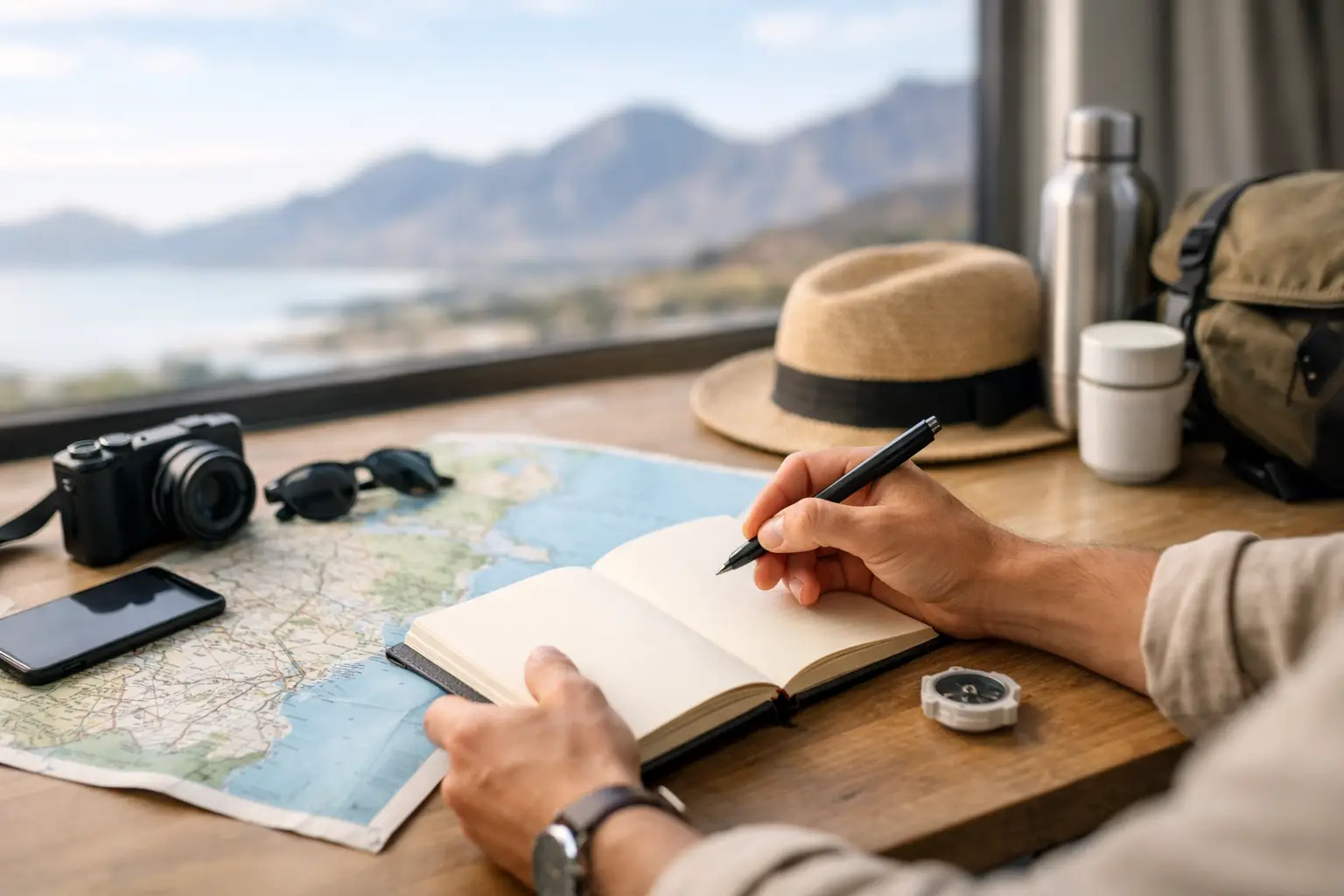
A solo trip can become an administrative project fast. Fifteen saved restaurants, four possible neighborhoods, a color-coded map, and a packing list built for every weather event will drain the freedom out of it. Knowing how to plan a minimalist solo travel itinerary means building enough structure to travel confidently, then refusing to fill every open space.
Minimalist travel is not about proving you can survive with one backpack or skipping experiences to save money. It is about reducing decision fatigue. You make a few high-value decisions before departure, create a reliable operating system for the road, and leave room for the moments that do not appear in a search result.
Start With a Trip Brief, Not a Destination Spreadsheet
Before comparing flights, write a short trip brief. One page is enough. Define the trip’s primary job: recovery, creative reset, food research, outdoor challenge, cultural immersion, or simply a change of scene while working remotely.
This matters because a destination can be objectively excellent and still be wrong for the trip you need. A packed city-hopping route works for someone researching architecture and museums. It is a poor fit for a traveler who needs quiet mornings, long walks, and a predictable work setup.
Set three constraints: your total budget, available days, and your energy level. Energy is the constraint most people ignore. If you have five days between demanding work cycles, do not design a three-city sprint just because the rail network makes it possible. Travel time is not dead time, but it is rarely restorative time either.
Then choose one anchor. It might be a city, a trail region, a festival, or a specific hotel where you can work well. Everything else should support that anchor instead of competing with it.
Use the One Base, One Extension Model
For most solo travelers on trips under 10 days, one base plus one optional extension is the cleanest itinerary architecture. Book a primary location for roughly 70 to 80 percent of the trip. Reserve the final segment for a second place only if it adds a distinctly different experience.
A six-day example is simple: four nights in Lisbon, then two nights in a coastal town. The first location handles arrival fatigue, orientation, and most major plans. The second gives the trip a change of pace without forcing you to repack every morning.
There are exceptions. Japan, Italy, and other countries with efficient transit can support multiple stops. But a good train system does not make constant movement free. Every transfer includes checkout, luggage management, navigation, check-in timing, and the subtle stress of resetting your bearings. Minimalism treats those costs as real.
Choose a base based on functional access, not just aesthetics. Look at walking distance to transit, grocery options, a pharmacy, cafes, and a place to sit outside. A beautiful but isolated rental can create a daily logistics burden that makes the whole trip feel smaller.
Build Around Geographic Clusters
Do not assign activities by day until you group them by neighborhood. Put saved places into three categories: essential, attractive if nearby, and disposable. Your essential list should be short. Think one signature meal, one landmark or museum, one outdoor experience, and one local ritual such as a market or live music venue.
Schedule only one fixed commitment per day whenever possible. If you have a timed museum entry at 11 a.m., let the nearby lunch, walk, and evening evolve naturally. This prevents the classic solo-travel mistake of crossing a city three times because every saved recommendation came from a different creator.
The goal is not to see less. It is to experience a place in coherent blocks rather than as a sequence of taxi rides and reservation alerts.
Book What Is Expensive to Miss
Minimalist planning is selective, not casual. Reserve the things with high failure costs: long-haul flights, your first several nights of lodging, required visas, major rail legs during peak periods, and rare experiences with limited capacity.
Leave routine meals, secondary attractions, and low-stakes day trips open. You do not need a dinner reservation for every night. As a solo traveler, you can often get bar seating, counter service, or a last-minute table more easily than a group can.
Use a simple booking rule: pre-book only when the cost of not booking is higher than the cost of losing flexibility. A once-a-week chef’s counter may justify a reservation. A popular brunch spot probably does not.
Keep every confirmation in one offline-accessible folder on your phone. Save copies of your passport, insurance information, lodging addresses, transit tickets, and emergency contacts. This is not glamorous, but it eliminates the frantic search through email when your battery is at 8 percent and your driver is waiting outside.
Create a Daily Floor, Not a Rigid Schedule
The best minimalist itinerary has a daily floor: a few actions that keep the day productive and pleasant without dictating every hour. For a city trip, that could mean a morning walk, one planned cultural stop, a proper meal, and a 30-minute reset back at your hotel before evening.
The reset is strategic. Solo travel can create a false pressure to maximize every waking hour because no one else is slowing you down. That leads to mediocre dinners chosen while exhausted and a phone full of photos from places you barely processed. Returning to your room, showering, charging devices, and reviewing tomorrow’s weather protects your energy.
Use weather as a routing tool, not a source of panic. Put indoor attractions and flexible work blocks on rainy days. Reserve scenic walks, markets, and outdoor neighborhoods for clear weather. If a forecast changes, you can swap categories without rebuilding the entire trip.
Keep One Blank Block Every Day
A blank block is not wasted time. It is the capacity that allows you to follow a local recommendation, stay longer in a neighborhood, take a nap after an overnight flight, or walk into a small gallery that was not on your list.
For many travelers, late afternoon is the best blank block. It is when the day’s actual rhythm becomes clear. You may want to rest, you may find a great coffee shop, or you may decide that the restaurant you bookmarked is no longer worth a 40-minute transit ride.
Pack for Repetition and Mobility
A minimalist itinerary fails when your luggage forces complicated decisions. The practical target is one carry-on bag and one small personal item for a week or two, assuming you have access to laundry. That setup reduces airport risk, makes train changes manageable, and gives you more freedom to use public transit.
Pack a repeatable wardrobe, not a collection of outfits. Choose a tight color palette and items that work across transit days, casual dinners, and long walks. Two pairs of shoes are usually enough: one comfortable walking pair and one cleaner pair for evenings, unless the trip has a specific technical requirement such as hiking or snow sports.
Your personal item should function as a mobile command center. Keep your passport, medication, charging cable, power bank, headphones, water bottle, light layer, and a small notebook there. If you are working while traveling, add a compact laptop stand only if you will genuinely use it. Extra gear has a carrying cost, and a cafe table is not always built for a full remote-office setup.
Build a Solo Safety System That Does Not Shrink the Trip
Solo travel requires more deliberate risk management, especially on arrival days and late nights. It does not require paranoia. Share your lodging details and broad itinerary with one trusted person, keep a backup payment card separate from your wallet, and use an eSIM or local data plan so you are not dependent on public Wi-Fi.
Arrive with a known plan for getting from the airport or station to your first lodging. The first hour in a new place is when travelers are tired, distracted, and more likely to accept a bad exchange rate or an unofficial ride. Download local transit maps before landing and carry enough local currency for a basic contingency, where cash remains common.
At night, choose confidence over optimization. The cheapest route home is not always the right route home. If a neighborhood feels wrong, leave. A minimalist approach values clear judgment more than squeezing maximum value out of every transaction.
The Real Metric Is Friction Removed
A strong itinerary is not measured by the number of pins you clear from a map. It is measured by how often the day moves without unnecessary negotiation, wasted transit, or decision fatigue.
Plan the fixed points. Protect your sleep, your money, and your arrival logistics. Then let the rest of the trip remain loose enough for reality to improve it. The best solo travel memory is often the hour you did not schedule because your system gave you permission to stay.