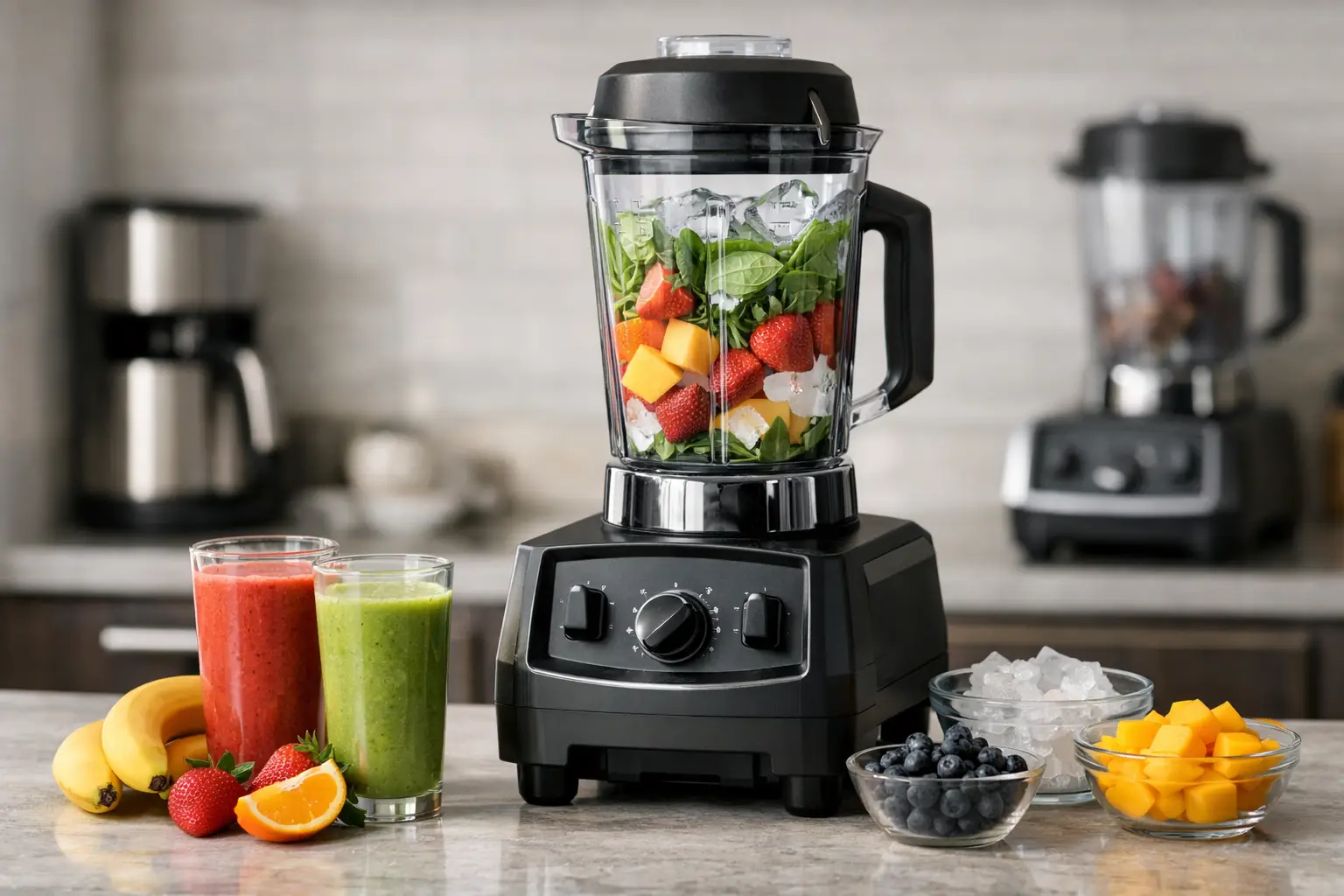
Rush hour in a smoothie bar exposes weak equipment fast. A blender that sounds powerful on day one can turn into a bottleneck once it is asked to crush ice, frozen fruit, nut butter, and greens for fifty drinks before noon. If you are shopping for a commercial blender for smoothies, the real question is not just power. It is whether the machine fits your volume, menu, noise limits, and cleaning workflow.
That distinction matters because many buyers overpay for horsepower they do not use, or worse, underbuy and end up replacing units after a season of heavy service. The right machine is less about brand prestige and more about system fit.
What a commercial blender for smoothies needs to do well
Smoothies are deceptively hard on equipment. They combine dense frozen ingredients, variable liquid ratios, fibrous produce, and customer expectations for a uniformly smooth texture. A consumer blender can handle a couple of morning shakes. A commercial unit needs to repeat the same result across dozens or hundreds of cycles without overheating, slipping blades, or forcing staff to stop and stir every other order.
Motor strength is part of that story, but not the whole thing. Jar geometry, blade design, cooling, drive coupling, and programmed controls matter just as much. A strong motor in a poorly designed container still creates dead zones. You get chunks at the top, warm product at the bottom, and staff compensating with extra blend time. That adds wear, noise, and ticket delays.
For smoothie service, consistency beats peak specs. The best machines create a reliable vortex with frozen product and recover quickly between blends. That is what keeps the line moving.
Power matters, but workflow matters more
Most buyers look at horsepower first, and that is reasonable. In the commercial category, you will usually see machines in the 2 to 4 horsepower range. For a dedicated smoothie operation, the sweet spot is often around the middle to upper end of that range. Enough power to pulverize ice and frozen fruit quickly, but paired with controls and container design that prevent overprocessing.
Overprocessing is an underrated problem. A smoothie that sits in a high-speed vortex too long gets warm, foamy, and thinner than intended. If your menu leans on clean fruit smoothies, protein blends, or green drinks where texture and temperature are part of the value, blend speed needs to be efficient rather than theatrical.
This is why programmable presets are not a luxury feature. In a real service setup, presets standardize output and reduce operator error. Staff should not have to guess whether a 24-ounce frozen mango smoothie needs 18 seconds or 32. Good presets also protect the machine from unnecessary abuse.
The jar is doing more work than most people think
Container size and shape should match your order profile. A large jar sounds versatile, but it can be inefficient for smaller single-serve drinks. If your business mostly sells 16- to 24-ounce smoothies, a huge container can make blending less precise unless the machine is designed for low-volume batches.
The shape of the jar controls ingredient circulation. For smoothies, you want a container that pulls frozen material back into the blades instead of pinning it to the walls. Wide jars can be useful for some applications, but tall, optimized smoothie containers often produce a stronger, cleaner vortex.
Material matters too. Polycarbonate and other durable plastics are common because they are lighter and less breakable in fast-paced environments. Stainless steel containers reduce noise and hide wear better, though they make it harder to see blending progress. That trade-off depends on your setup. Front-of-house juice bars may prioritize visibility. Back-of-house prep stations may prioritize durability and sound control.
Noise is not a side issue
If your blender sits behind a cafe counter or inside a compact hospitality space, noise becomes a brand problem, not just an equipment problem. Customers tolerate some blender noise. They do not love a machine that hijacks every conversation in the room.
This is where sound enclosures earn their keep. A quiet commercial blender for smoothies can change the feel of a cafe, hotel breakfast station, wellness bar, or open kitchen. It also makes work less fatiguing for staff over a full shift. The trade-off is footprint. Sound shields add bulk, and in very tight stations that can complicate access and cleaning.
If your operation is back-of-house only, noise may be less important than speed and serviceability. If you blend in front of customers, it should be one of your top buying criteria.
Match the machine to the business model
Not every smoothie setup needs the same blender. That sounds obvious, but it is where most buying mistakes happen.
A high-volume smoothie bar needs durability, speed, cooling performance, and repeatable programming above all else. This is the environment for premium commercial units that can absorb constant use without drifting in texture or timing. You are paying for uptime.
A cafe that sells smoothies as a secondary menu item has a different calculus. You still need commercial reliability, but the best fit may be a quieter, more compact model with fewer presets and a slightly lower output ceiling. Overspending on a flagship blender for a side category can drag down equipment ROI.
For advanced home cooks, meal-prep households, or creators building a serious nutrition workflow, the line gets interesting. A true commercial unit may make sense if you regularly blend frozen packs, bulk protein drinks, nut-based smoothies, or prep in batches. But commercial machines are louder, heavier, and often less pleasant to store. If you make two smoothies a day, buying restaurant-grade hardware can be overkill unless durability is your core priority.
Cleaning speed is part of output
A blender that takes ninety seconds to clean between sticky recipes is not fast. In a rush, cleaning friction creates shortcuts, and shortcuts create flavor transfer, sanitation problems, and ugly wear.
For smoothie operations, easy rinsing and simple disassembly matter. Blades that stay sharp longer matter. Containers that do not trap pulp under the lid matter. If your menu includes peanut butter, dates, yogurt, collagen, protein powders, or leafy greens, residue buildup is not hypothetical.
Look closely at how your team will actually use the machine. Are they blending one standard recipe repeatedly, or switching all day between berry, tropical, green, mocha, and high-protein drinks? The more menu variation you have, the more cleaning workflow affects throughput.
Durability is about heat, not just impact
Most commercial blenders are built to survive drops, heavy jars, and rough handling. The deeper durability issue is thermal stress. Repeated frozen blending generates heat in the motor and drive system, especially when operators underfill with liquid or force thick recipes beyond the machine’s comfort zone.
That is why warranty length alone does not tell the full story. You want to know how the blender manages cooling, whether the drive system is proven in real beverage service, and how easy it is to replace wear parts. A machine that lasts five years with predictable maintenance is often cheaper than a cheaper unit replaced twice.
For buyers running a business, service access matters as much as specs. Downtime during peak season costs more than a premium purchase price.
Features worth paying for, and features you can ignore
A few features consistently justify the cost. Variable speed control is useful when your menu includes more than one texture target. Preset programs are valuable for training and consistency. A pulse function helps with thick blends that need a quick ingredient reset. Sound enclosures are worth real money in customer-facing environments.
A touchscreen interface can be useful, but only if it is responsive and durable. Fancy control panels are not automatically better. In many operations, simple membrane buttons outlast more glamorous designs.
Connectivity features are usually lower priority unless you are running a multi-unit operation with strict recipe standardization. For most buyers, reliable performance beats app integration every time.
How to choose the right commercial blender for smoothies
Start with volume. Estimate how many smoothies you expect per hour at peak, not per day. Peak load reveals whether you need a heavy-duty flagship machine or a more moderate commercial unit.
Next, map your menu. Thick acai-style bowls, frozen protein blends, and green smoothies all stress blenders differently. Then evaluate the station itself. Counter depth, ventilation, front-of-house visibility, and sink access all shape the right choice.
After that, think in labor terms. Can a new staff member produce the same drink quality on day one? If not, you may need stronger presets or a simpler interface. Equipment that reduces decision-making usually performs better under pressure.
Price should come last. Not because budget does not matter, but because a blender is a throughput tool. If it saves seconds on every order, reduces remakes, and avoids downtime, the math changes quickly.
The smartest buy is rarely the cheapest or the most powerful. It is the one that fits your actual service pattern with the least friction. Buy for the line you expect to have, the recipes you really serve, and the staff behavior you actually see. That is how a blender stops being a gadget and starts acting like infrastructure.