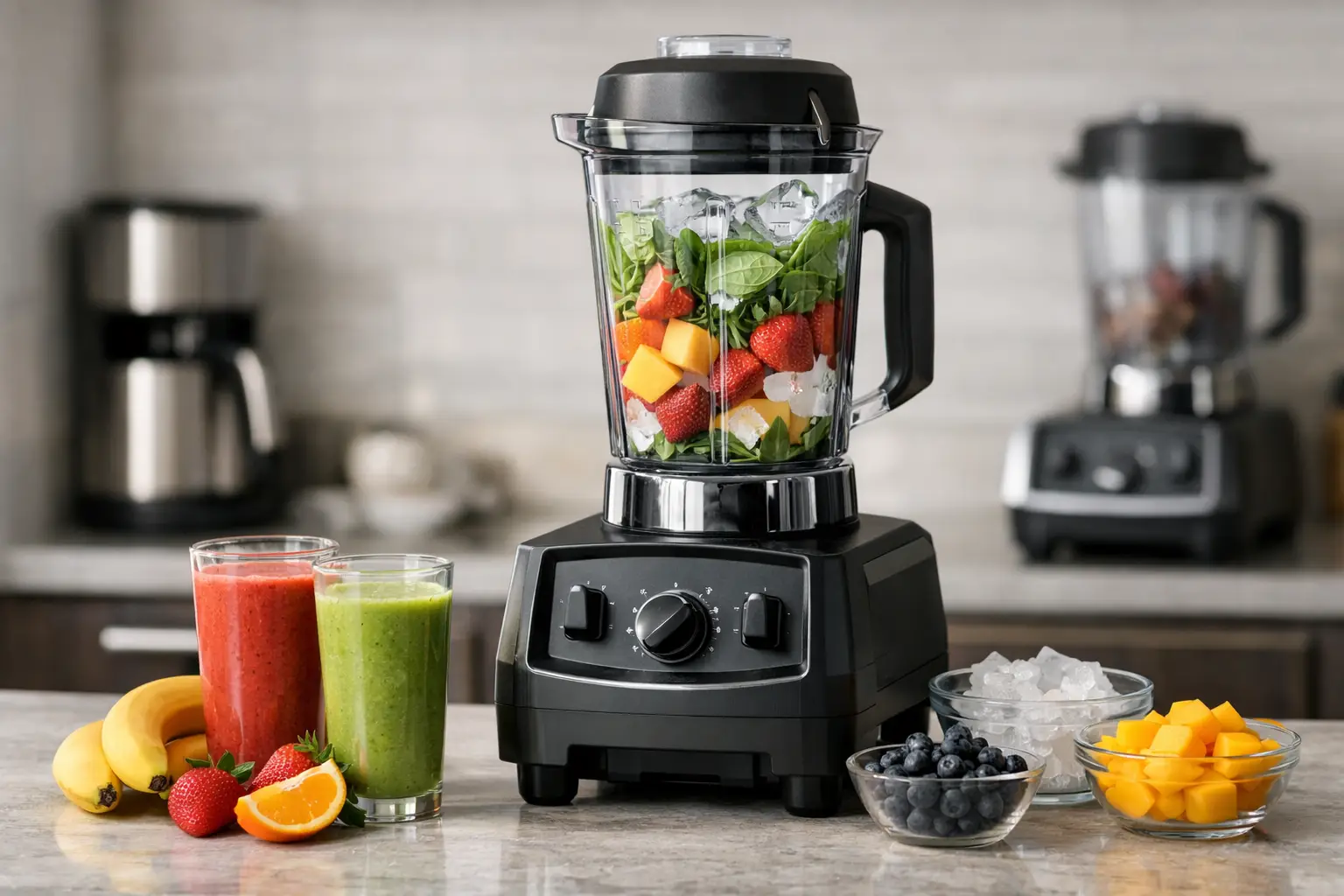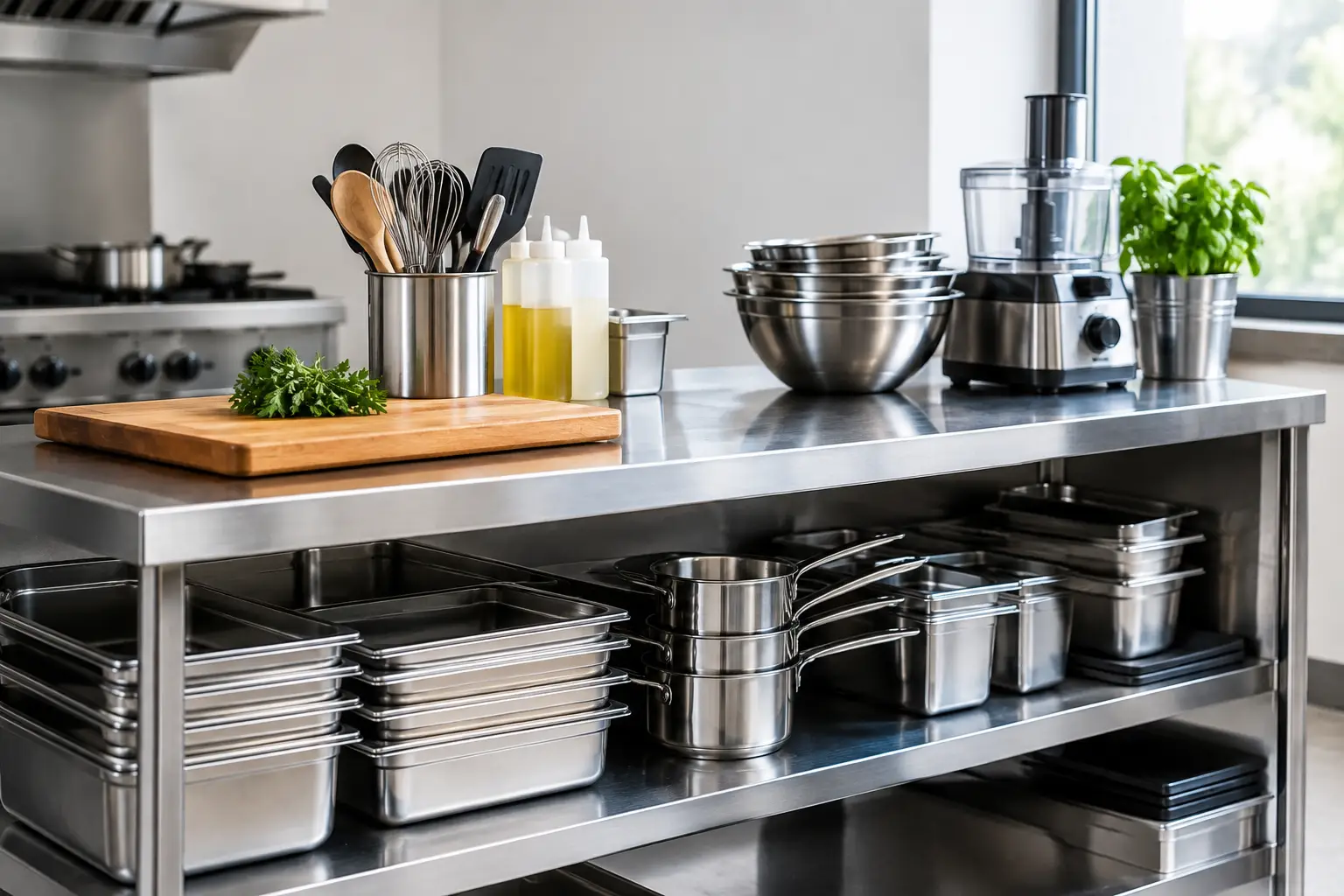
A crowded counter is rarely a storage problem. It is a workflow problem. To build a kitchen equipment station that actually improves dinner, prep, and cleanup, stop treating every appliance as equally worthy of permanent counter space. Your kitchen should reflect the work you do most often, not the tools you happened to buy over the years.
Professional kitchens earn speed through stations: distinct zones where the needed tools, ingredients, power, and cleanup access sit within a few steps of each other. A home kitchen does not need a steel prep line to use the same logic. It needs a disciplined setup that reduces lifting, searching, plugging in, and moving equipment out of the way.
Start With Your Real Cooking Pattern
Before measuring a shelf or shopping for organizers, audit the last ten meals you made. Look for repetition. If you make coffee every morning, batch lunches on Sunday, blend smoothies three times a week, and bake once a month, those routines deserve different levels of access.
The mistake is building around aspiration. A stand mixer looks impressive on the counter, but it is poor station planning if it comes out four times a year while the knife block, cutting boards, and olive oil are crammed into a corner. High-frequency tools should be visible and reachable. Low-frequency, bulky equipment should have a designated home that is easy to retrieve without being permanently displayed.
Think in three access levels. Daily equipment stays on the counter or on an open shelf. Weekly equipment belongs in a nearby cabinet, drawer, or appliance garage. Monthly and seasonal equipment can live higher, lower, or farther away. This single decision prevents your station from becoming expensive clutter.
Build a Kitchen Equipment Station Around a Job
The strongest setup is not one giant appliance zone. It is a set of compact workstations built around actual tasks. Most serious home kitchens benefit from a prep station, a heat station, a beverage station, and a cleanup station. You may only have room for two. That is fine. The point is to make deliberate trade-offs.
The prep station is your highest-return upgrade
Place the prep station near the refrigerator and sink whenever possible. It needs a clear cutting surface, knives, cutting boards, a compost or scrap container, and access to bowls, sheet pans, and storage containers. If the counter is narrow, a large end-grain board can function as a semi-permanent work surface, provided it is stable and can be cleaned underneath.
Keep the equipment here focused. A compact food processor, immersion blender, kitchen scale, and mandoline might belong in or near this zone if you use them weekly. Do not park every specialty tool within arm’s reach. The station should help you start work immediately, not force you to clear a runway before chopping an onion.
Knife storage deserves special attention. A magnetic strip or in-drawer organizer often works better than a countertop block because it preserves workspace and lets you see what is available. The trade-off is safety: a magnetic strip must be firmly mounted away from a child’s reach, and blades should be placed spine-first.
The heat station needs landing space
Your range is already a station, but many home kitchens fail to support it. Put the most-used pans, utensils, oils, salt, and heat-safe trivets close enough to reach without crossing the kitchen. You should be able to move a hot skillet off the burner without first relocating mail, a toaster, or a stack of cookbooks.
A narrow drawer beside the range is ideal for tongs, spatulas, thermometers, and pot holders. If you do not have that drawer, use a contained utensil crock and limit it to tools you use during active cooking. Six useful tools beat twenty handles that jam together.
Countertop cooking equipment requires more caution. An air fryer, toaster oven, induction burner, or multicooker needs heat clearance, stable ventilation, and a dedicated outlet that is not overloaded with other high-wattage devices. Never plan a station on the assumption that an extension cord will solve the power problem. It creates a safety issue and usually signals that the layout is fighting the room.
Beverage equipment should stop invading prep space
Coffee gear expands until it takes over the kitchen. A dedicated beverage station keeps grinders, brewers, kettles, filters, mugs, and beans together, while releasing the main counter for cooking. Set it near water access if possible, but not so close to the sink that splashes and dish piles compromise the area.
This station is a good place for vertical storage. Wall-mounted rails, a shallow shelf, or cabinet risers can hold mugs and supplies without using the prep surface. If several people use the kitchen in the morning, keep milk alternatives, tea, and travel mugs within the same zone. The goal is to make breakfast traffic predictable rather than competitive.
Measure the Friction, Not Just the Counter
A station succeeds when it shortens the number of motions required to complete a task. Watch yourself make a normal meal. How many times do you open a drawer? Where do you turn around? Which appliances must be unplugged and moved before you can use them? Those are your system failures.
Start with the classic work triangle, then improve on it. The sink, refrigerator, and cooktop should remain practical anchors, but your equipment should follow the sequence of your own cooking. A smoothie station near the pantry might matter more than a textbook triangle if breakfast is your daily rush point.
Pay attention to door swings and drawer clearance. A beautiful appliance shelf fails if the refrigerator door blocks it. A pull-out mixer shelf is wasted if you cannot fully raise the mixer under the cabinet above. Tape the footprint of larger equipment onto the counter and open every nearby door before committing to a layout.
Electrical capacity is another constraint people discover too late. Check the wattage of major countertop equipment and avoid stacking high-draw devices on the same circuit. If you are designing a serious baking, espresso, or countertop cooking zone, an electrician’s assessment may be more valuable than another storage accessory.
Choose Equipment That Can Earn Its Footprint
Counter space is premium real estate. Every permanent appliance should clear a simple test: Does it save enough time, produce a better result, or remove enough friction to justify the space it occupies?
For many advanced home cooks, a high-performance blender, quality food processor, digital scale, instant-read thermometer, and a countertop oven can earn that status. The exact mix depends on how you cook. A baker may give the stand mixer a permanent home. A family that relies on fast weeknight meals may prioritize an air fryer or multicooker. A cook who values knife skills may skip the processor entirely and preserve the counter for a larger prep board.
Avoid buying systems of single-purpose gadgets. They create storage debt. A well-chosen appliance with multiple credible uses is usually more valuable than four novelty tools that each solve a narrow problem once a month.
Also account for cleaning. Equipment that is technically useful but miserable to wash will slowly disappear from your workflow. Keep cleaning brushes, microfiber towels, and a small tray for drying removable parts near stations that produce frequent messes. The fastest setup is the one people will reset after every use.
Build in Reset Rules
A kitchen station needs an operating standard, not just a nice first-day arrangement. Decide what stays out, what gets wiped down nightly, and where consumables are replenished. If your coffee station runs through filters, beans, and cleaning tablets, give those supplies a defined home. If the prep station uses containers and sheet pans, return them to the same cabinet every time.
Visual boundaries help. A tray can define a coffee station. A shallow bin can hold baking attachments. A vertical divider can assign a permanent slot to cutting boards. These are small controls, but they prevent the slow drift that turns an organized kitchen back into a dumping ground.
Test your layout for two weeks before buying permanent shelving or cabinet inserts. You will quickly learn whether the blender belongs near the sink, whether your utensil drawer is too shallow, and whether a supposedly daily appliance really deserves counter space. A kitchen equipment station is not a showroom installation. It is a working system that should adapt as your habits become clearer.
The best sign that the system is working is almost boring: cooking feels easier, cleanup has a place to go, and your counters stay available when you need them most.