The Real Price of War Is Never Paid by the People Who Start It
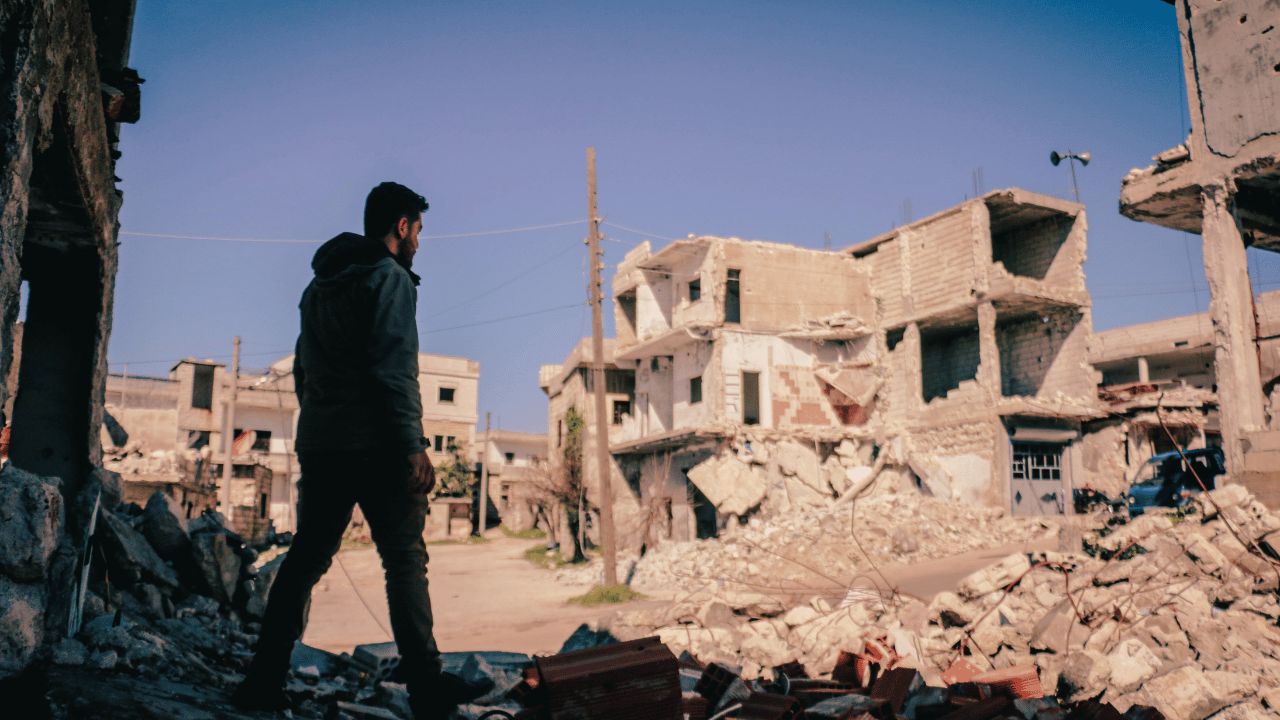
World leaders talk about war in a language that has no blood in it. They say “security architecture,” “strategic depth,” “spheres of influence” and “the rules-based order.” But the real price of war is not paid in conference rooms in Washington, Brussels or Moscow. It is paid by a mother in a basement in Kharkiv, a father digging through rubble in Gaza, and a child in Darfur who has been forced to run three times before turning ten.
This post started with something small. I was scrolling Twitter and saw Ukraine’s president talking about wanting the war to end, right at a time when American support is clearly drying up. I’ll be honest, my first reaction was not polite. Then I started asking bigger questions, about how this war began, who drew the first blood, and why the rules seem to change depending on who is holding the weapon.
Where I landed is simple, and I want to say it upfront. Wrong is wrong, even if the whole world does it. Right is right, even when no one does it. What Russia did to Ukraine is wrong. What the US and its allies have done across the Middle East and beyond is wrong too. And in every one of these wars, the ordinary civilian loses.
I am a peace seeker. I want to see people live in societies built on tolerance, harmony and peace. So this is not a pro Russia post, and it is not a pro West post. It is a pro human one.
How the Russia Ukraine War Really Started
Most people think this war began in February 2022. It didn’t. The full scale invasion was the second chapter of a conflict that started eight years earlier, in 2014.
In late 2013, Ukraine’s pro Russian president, Viktor Yanukovych, suddenly dropped a long negotiated association agreement with the European Union under pressure from Moscow. Huge protests broke out, known as Euromaidan. By February 2014, more than 100 people had been killed in clashes in Kyiv, and Yanukovych fled to Russia.
So who drew the first blood? Days after Yanukovych fled, Russian special forces without insignia, the so called “little green men,” took over government buildings and airports in Crimea. Moscow then annexed the peninsula after a referendum held under armed occupation. In April 2014, armed pro Russian groups led by figures like former Russian intelligence officer Igor Girkin seized buildings in Donetsk and Luhansk. Ukraine answered with what it called an “Anti Terrorist Operation,” and the war in Donbas began.
Between 2014 and early 2022, more than 14,000 people died in eastern Ukraine. Then on February 24, 2022, after massing over 150,000 troops on the border, Russia launched a full invasion. It became the largest high intensity war Europe has seen since World War II.
Now flip it around: what if it were the United States?
Here is the thought experiment that started my whole frustration. Replace Russia with the US. Imagine Mexico or Canada joining a military alliance led by China or Russia. Would Washington sit quietly? We already know the answer, because history has shown it to us.
- The Monroe Doctrine (1823). The US declared the entire Western Hemisphere off limits to outside powers. That is a sphere of influence in plain words.
- The Cuban Missile Crisis (1962). When the Soviet Union placed nuclear missiles in Cuba, about 90 miles from Florida, the US blockaded the island and was ready to invade. Cuba was a sovereign country that had invited those missiles.
- Latin America. Grenada in 1983, Panama in 1989, and years of backing armed groups in Nicaragua. All of it was justified as keeping hostile influence away from America’s doorstep.
Realist scholars like John Mearsheimer have argued for years that great powers behave exactly this way. From that angle, Russia’s reaction to NATO moving toward its border was predictable, just as an American reaction to a hostile alliance in Mexico would be.
The official Western answer, and why it falls flat for many of us
The US and EU response is that international law protects sovereign states. They point out that Ukraine had the right to choose its own alliances. They note that countries like Poland and the Baltic states asked to join NATO, and that Ukraine gave up its nuclear weapons in 1994 under the Budapest Memorandum in exchange for security assurances from Russia, the US and the UK. They are not wrong about any of those facts.
But for a lot of people around the world, including me, that argument loses its weight the moment you look at the last half century. The same governments that quote the UN Charter have bombed, invaded and changed the regimes of sovereign countries whenever it suited them. When the rule only applies to your rivals, it stops being a rule. It becomes a tool.
That is why I don’t accept Russia’s excuse, and I don’t accept the West’s moral speech either. Both are wrong. And both send the bill to ordinary people.
The Illusion of Distant Allies and Who Really Pays
There is a line widely attributed to Henry Kissinger that every small country should tape to its wall: “It may be dangerous to be America’s enemy, but to be America’s friend is fatal.” Being the enemy of a superpower is dangerous. Being its friend can be even more dangerous, because a friend thousands of miles away can change its mind after one election.
That is exactly what we are watching now. In October 2026, tensions between Kyiv and Washington boiled over on sanctions, strikes on Russian energy sites and restrictions on Starlink satellite access. Zelensky himself admitted those Starlink restrictions disrupted drone interception and military logistics. He then went to Brussels and asked the EU for at least 70 billion euros more for 2027, telling leaders the war will cost 155 billion euros next year. Meanwhile, Washington is pushing for a new round of three way technical talks with Russia.
Think about what that means for a country. Your survival depends on budget votes in a foreign parliament, on who wins an election you can’t vote in, and on whether the superpower suddenly gets distracted by another crisis. This year that distraction has a name, the US and Israeli war with Iran that began in February.
Neighbors don’t move away
Ukraine and Russia share a long border, a deeply connected history, and for millions of people the same language and family ties. Allies come and go. Neighbors stay. A wise leader in that position looks for a middle ground both sides can live with, instead of betting everything on a partner sitting across an ocean.
Zelensky actually ran in 2019 as the peace candidate, promising to end the Donbas conflict through direct talks with Moscow. Those talks stalled. Moscow wanted Ukraine permanently out of NATO, wide autonomy for Donbas and acceptance of Crimea’s loss, which most Ukrainians saw as surrender. Defenders of Kyiv also point out that Russia took Crimea in 2014 when Ukraine was officially non aligned, so neutrality alone did not protect it. That is a fair point, and I won’t pretend it isn’t.
Still, Finland managed armed neutrality next to the Soviet Union for decades and kept its independence. Instead, Ukraine’s leadership seemed to believe that with American and European help it could overpower Russia, one of the most powerful militaries on earth and a country with roughly three times Ukraine’s population. From where I sit, it often looked like Ukraine was being run as an extension of Washington’s foreign policy rather than as a country choosing its own path.
Wars are won when the nation is behind the government
Weapons alone don’t win wars. The great military thinker Carl von Clausewitz described war as a triangle of the people, the army and the government. If the people are not behind it, the other two eventually collapse. The US had overwhelming firepower in Vietnam and Afghanistan, and the Soviet Union had it in Afghanistan too. All of them left.
In 2022, Ukrainian unity was real. Millions volunteered and the country rallied hard against the invasion. But years into a grinding war of attrition, the picture changed. Heavy losses, forced conscription, men being pulled off the streets by recruiters and widespread draft avoidance tell you a lot about how tired people are. Surveys still show many Ukrainians refuse to simply give up territory, but the appetite to fight forever has clearly worn down.
Would the message be the same if the money was still flowing?
This is the question that stayed with me. When billions in weapons were arriving with few questions asked, the language from Kyiv was about total victory and taking back every inch. Now that the main supply line is wobbling, we hear more about the human cost and the need for the war to end.
To be fair, there are two ways to read this. One is that the shift is purely transactional, and the human suffering is pushed forward only when it becomes useful. The other is that reality simply caught up, because a smaller country fighting a much bigger one hits a ceiling sooner or later. Either way, history shows that wartime leaders change their tune when their options shrink. And either way, the people who paid the real price of war during all those years of maximum rhetoric were the soldiers and civilians, not the people giving the speeches.
The Universal Civilian Toll: The Real Price of War Has No Nationality
A family grieving in Kyiv feels exactly what a family grieving in Donetsk feels. A mother in Moscow who loses her conscripted son feels what a mother in Gaza, Baghdad or Tehran feels. Grief does not check passports. Borders are lines on paper, but pain is the same in every language.
Here is what the numbers look like today, as best as the people counting can tell us.
| Conflict | What civilians have paid | Source |
|---|---|---|
| Russia and Ukraine | 65,044 civilian casualties verified by the UN since February 2022, as of June 2026, including more than 15,000 deaths | UN Human Rights Office (OHCHR) |
| Gaza | 74,389 people killed and 175,423 injured since October 2023, as of October 13, 2026, with about 1,500 killed even after the October 2025 ceasefire | Gaza health authorities via WAFA |
| Iran | About 3.2 million people temporarily displaced and about 3,375 civilian deaths reported by Iran’s health ministry (independent counts run lower) after US and Israeli strikes began on February 28, 2026, including a school strike that killed over 160 children | NRC, OCHA, UN Fact Finding Mission |
| Lebanon | More than 1 million people displaced and over 4,000 killed since March 2026 | UN OCHA |
| Sudan | At least 59,000 civilians killed, about 14 million displaced, and 33.7 million in need of aid | United Nations |
| Iraq, Afghanistan, Syria, Yemen, Pakistan and more | 4.5 to 4.7 million deaths, direct and indirect, and at least 38 million displaced in the post 9/11 wars | Brown University Costs of War |
Look at that table again and notice where most of the suffering sits. Iraq, Afghanistan, Syria, Yemen, Libya, Palestine, Lebanon, Iran, Sudan, Somalia, Pakistan. The eastern world, and especially the Muslim world, has carried an enormous share of this century’s bloodshed. Yet these are often the people the Western public is most suspicious of.
Why we stop feeling it
There is a reason big numbers stop moving us. Psychologist Paul Slovic calls it “psychic numbing.” His research shows that our compassion actually drops as the number of victims grows. We can cry for one child in a photo, but a hundred thousand becomes a statistic. Researchers call the flip side the “identifiable victim effect.”
Governments know this, whether they admit it or not. That is why the language of war is so clean. People become “collateral damage.” Bombing becomes “kinetic action.” Psychologist Albert Bandura described this as moral disengagement, the mental tricks that let ordinary people support terrible things without feeling responsible. Once you see the trick, it is hard to unsee it.
Behind every number in that table there is a kitchen that no longer exists, a school bag left in the dust, a phone that will never be answered again. That is the real price of war, and it is paid on every side of every front line.
Moving Beyond Imperial Double Standards
I am done with Western governments taking the moral high ground while hiding their own hypocrisy behind words like “terrorism,” “freedom” and “stability.” The record is right there for anyone willing to look.
- Iraq, 2003. Invaded without UN Security Council authorization, based on claims about weapons of mass destruction that turned out to be false. Brown University’s Costs of War project counts around 315,000 direct war deaths in Iraq alone.
- Afghanistan, 2001 to 2021. Twenty years of war, around 176,000 direct deaths by the same count, and a country handed back to the very group the war was meant to remove.
- Libya, 2011. A NATO campaign that helped topple Gaddafi and left behind a broken state, rival governments and open slave markets for migrants.
- Syria, Yemen, Somalia and Pakistan. Airstrikes, drone wars, proxy forces and arms sales, with civilians caught underneath all of it.
- Iran, 2026. A fresh war launched this February, and UN investigators were still calling for an end to US strikes in September after a residential home and a wedding were hit.
When Russia redraws borders by force, it is called aggression, and it is aggression. When the West does something similar, it is called a “mission” or an “operation.” An unlawful invasion is an unlawful invasion. A foreign intervention that kills civilians is exactly that, no matter whose flag is on the plane.
The burning house
This is the part that hurts the most, and I want to say it in my own words.
You come to my house and burn it. I walk out and take refuge somewhere, which happens to be “your territory,” because around 1924 your ancestors drew lines on the planet and divided the world into modern states. You squeeze my resources. You pull the intelligent brains out of my country to build your labs and your industry. And now you blame me for not staying in the burning house, the one you set on fire to begin with, and burning with it.
That isn’t just a feeling. It is history.
- The lines. The Sykes Picot agreement of 1916 and the Treaty of Lausanne in 1923 carved up the former Ottoman lands. The Ottoman caliphate itself was abolished in 1924. Earlier, the Berlin Conference of 1884 and 1885 split Africa among European powers. Those borders ignored tribes, languages and faiths, and many of today’s wars still trace back to them.
- The resources. Oil, minerals and trade routes shaped who got invaded, who got protected and who got ignored.
- The brain drain. Wealthy countries actively recruit doctors, engineers and scientists from poorer nations. The World Health Organization keeps a “red list” of countries so short of health workers that rich nations are asked not to recruit from them, and many of those countries are in Africa and the Muslim world.
Then the refugee gets blamed
I am also done with parts of the Western public blaming Muslims for “invading” their countries, when their own governments bombed and destroyed so many Muslim countries and made them unlivable. When people finally flee those destroyed homes, politicians in host countries call them “invaders” or a threat. The war that created them disappears from the conversation. Psychologists have a name for part of this too. The “fundamental attribution error” is our habit of blaming a person’s character for something their situation forced on them. A refugee is not someone who chose to leave paradise. A refugee is someone whose paradise was bombed.
The post 9/11 wars alone displaced at least 38 million people, according to Brown University researchers. That is more than any war since 1900 except World War II. No one should be forced to burn in a fire someone else lit. Seeking safety for your children is not a crime. It is the most human thing a person can do.
A Call to Action: Let’s Stop Paying the Real Price of War
At the end of the day, I just want it to end. I want it to end for the ordinary people suffering on both sides. So many innocent people have died.
When I first wrote about this, I said this century has been the bloodiest in human history. I was gently corrected, and the correction matters. The 20th century still holds that title. World War I, World War II, Korea, Vietnam and several genocides killed well over 100 million people, with some estimates reaching 180 million. But the 21st century is doing its best to compete. Iraq, Afghanistan, Syria, Yemen, Libya, Sudan, Gaza, Lebanon, Ukraine and now Iran. And because we watch it live on our phones, it feels closer than ever. The lesson from the last century is clear. When great powers stop listening to each other, the bodies are counted in the millions.
When the dust settles, it is never the politicians, the generals or the arms manufacturers who end up in mass graves. It is the farmer, the nurse, the student, the shopkeeper and the child. That is why I believe change has to come from below.
What ordinary people can actually do
- Hold one standard for everyone. If you condemn an invasion by Russia, condemn an invasion by the US. If you mourn children in Kyiv, mourn children in Gaza, Tehran and El Fasher. Selective outrage is how wars keep getting permission.
- Push your own politicians. Call, write, vote and protest. Ask your representatives where your tax money is going, which wars it is feeding, and what the plan for peace actually is. Leaders respond to pressure, so make peace a voting issue.
- Question the clean language. When you hear “collateral damage,” “surgical strikes” or “defending our interests,” ask who is under the bombs. Ask who profits.
- Refuse to hate the people on the other side. A worker in Moscow is not your enemy. Neither is a family in Tehran or a teenager in Gaza. Governments fight. People suffer.
- Welcome those who flee. Treat refugees as survivors, not threats. Many of them are running from fires our own governments helped light.
- Support the people who help. Humanitarian groups working in Sudan, Gaza, Ukraine, Lebanon and Iran are badly underfunded. Even small, regular donations to trusted organizations make a real difference.
Peace is not one empire beating another
True peace will not come when one empire defeats another. It comes when people everywhere refuse to be used as fuel for wars fought on behalf of elite interests. Wrong is wrong, even if the whole world does it. Right is right, even when no one does.
Universal human dignity is not a slogan for me. It is the only line I think is worth drawing on this planet. If enough of us join hands across borders and push our leaders to stop, maybe the next generation won’t have to read posts like this one. Maybe they will finally live in a world where no family has to pay the real price of war.
If this resonated with you, share it with one person who sees these wars through only one side. That is how the conversation changes, one honest talk at a time.
Frequently Asked Questions About the Real Price of War
What is the real price of war?
The real price of war is the human cost carried by ordinary civilians. It means lost lives, destroyed homes and hospitals, displacement, hunger, trauma and broken economies that last for generations. Leaders rarely pay it. Families on every side do.
When did the Russia Ukraine war actually start?
It started in 2014, when Russia seized and annexed Crimea and armed pro Russian groups took over parts of Donetsk and Luhansk. The full scale invasion on February 24, 2022 escalated that conflict into Europe’s largest war since World War II.
Is Russia’s invasion justified by NATO expansion?
Realist scholars like John Mearsheimer say NATO expansion explains Russia’s behavior, since great powers react to rival alliances near their borders. International law says it cannot justify invading a sovereign country. You can understand a motive without accepting it as right, and the same standard should apply to every great power, including the US.
How many people have been displaced by war worldwide?
UNHCR reports 117.8 million people were forcibly displaced at the end of 2025, about one in every 70 people on earth. Around 39 percent of them are children.
How can ordinary people help end wars?
Apply one moral standard to every country, pressure your own elected officials, question the sanitized language of war, support refugees and give to trusted humanitarian groups working in conflict zones.
Sources
- France 24: Zelensky rallies European allies as US support wanes (October 16, 2026)
- France 24: US wants trilateral talks with Russia by end of October (October 2026)
- Ukrainska Pravda: Zelensky asks EU for at least 70 billion euros for 2027 (October 16, 2026)
- China Daily Asia: Zelensky on Starlink restrictions (October 17, 2026)
- Statista, citing OHCHR: civilian casualties in Ukraine to June 30, 2026
- Statista, citing OHCHR: civilian deaths in Ukraine to February 2026
- Bernama and WAFA: Gaza death toll, October 13, 2026
- Norwegian Refugee Council: Iran war and displacement
- UN News via GlobalSecurity: UN investigators on US strikes in Iran (September 14, 2026)
- TIME: The US Iran war by the numbers
- Wikipedia: 2026 Lebanon war
- IPS: UN alarm over abuses and cholera in Sudan (July 13, 2026)
- UNHCR: Global Trends figures at a glance (updated June 11, 2026)
- UNHCR: 10 things to know about Global Trends
- Brown University Costs of War: Human costs
- Al Jazeera: The human cost of 25 years of US wars (September 11, 2026)
You might also like Global Shifts