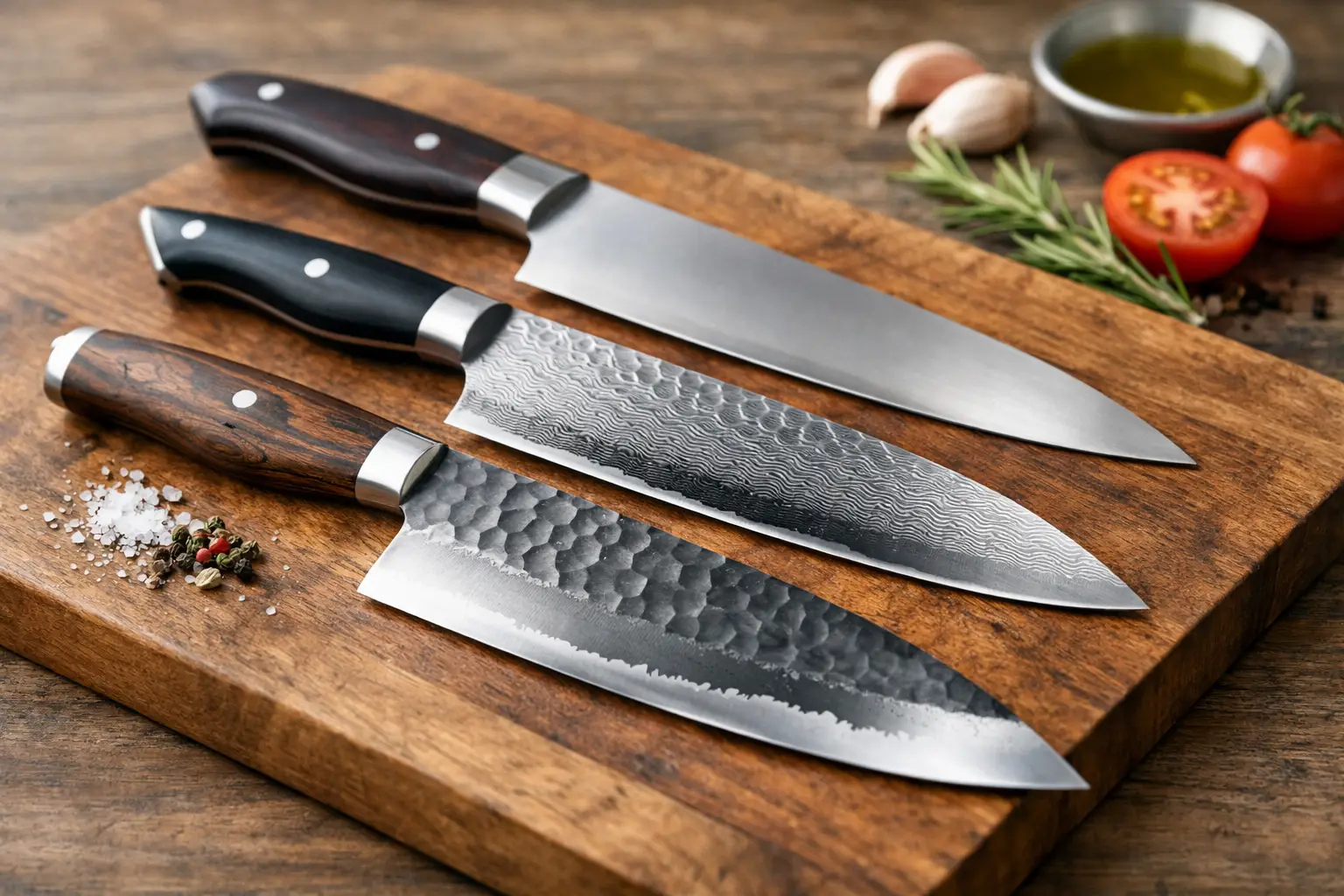
A chef knife that looks great on a product page can still be a bad fit once it hits your board six hours a week. That is why the best chef knife steels are not the ones with the most exotic names. They are the steels that match your cutting habits, maintenance tolerance, sharpening setup, and the kind of food you prep most often.
If you cook like a systems thinker, steel choice is not trivia. It sets the maintenance schedule, the sharpening interval, the feel on the board, and even how much confidence you have pushing through onions, herbs, squash, and proteins. The smart buy is rarely the steel with the highest hardness number. It is the one that performs well inside your actual workflow.
What actually matters when comparing the best chef knife steels
Most steel discussions get lost in forum theater. For real kitchen use, four variables matter most: edge retention, toughness, corrosion resistance, and sharpenability.
Edge retention is simple. How long does the knife stay performing at a high level? A steel with strong wear resistance will hold an edge longer, which sounds ideal until you need to sharpen it. High wear resistance often means more time on stones and more frustration if your sharpening skills are still developing.
Toughness is about resisting chips and fractures. This matters if you use a harder cutting style, work quickly, or sometimes twist through dense ingredients instead of making perfectly straight cuts. Tough steels forgive more bad habits.
Corrosion resistance matters more than many home cooks admit. If you leave a knife wet by the sink, cut acidic ingredients, or share the kitchen with family members who treat tools casually, stainless behavior is not a luxury. It is protection against your own environment.
Sharpenability is the quiet deal-breaker. A steel that looks elite on paper can become annoying if it takes too long to bring back. If you want a knife that lives in rotation instead of sitting around waiting for a full sharpening session, easier steels often win.
Best chef knife steels by type of cook
There is no single winner, but there are clear standouts depending on how you cook and maintain your gear.
VG-10 for balanced everyday performance
VG-10 remains one of the safest premium choices for serious home cooks. It offers a solid mix of edge retention, stainless behavior, and relatively accessible sharpening. Many Japanese chef knives use it because it hits the middle of the market well: refined enough to feel like an upgrade, but not so demanding that ownership becomes a project.
Its weakness is brittleness compared with softer German-style steels. In thin grinds, VG-10 can microchip if the heat treatment is aggressive and your technique is sloppy. Still, for cooks who want crisp performance without committing to carbon steel maintenance, VG-10 earns its popularity.
AEB-L for people who value feel and easy maintenance
AEB-L does not get the same flashy marketing treatment as some powdered steels, but it is a serious performer. It is stainless, tough, fine-grained, and easy to sharpen to a very keen edge. In actual prep, that often translates to a knife that feels smooth, controlled, and easy to maintain.
If your system is frequent touch-ups rather than waiting until a knife is fully dull, AEB-L makes a lot of sense. It may not hold an edge as long as the most wear-resistant steels, but many cooks prefer a steel that sharpens quickly and cuts cleanly over one that turns every maintenance session into a long grind.
SG2 or R2 for high-end stainless edge retention
SG2, often labeled R2, is where premium stainless starts feeling clearly premium. It can run at high hardness, take a refined edge, and hold that edge for a long time. For detail-oriented cooks who want excellent performance with stainless convenience, SG2 is one of the best chef knife steels available.
The trade-off is toughness and sharpening effort. You get stronger edge retention, but you also get a steel that benefits from better technique and better stones. If you chop carelessly, scrape the board with the edge, or cut through hard materials, SG2 can punish you. In the right knife and the right hands, though, it is excellent.
Blue 2 and Blue Super for carbon steel fans
If you care most about edge feel, sharpening response, and that crisp bite carbon steel gives on produce, Blue 2 and Blue Super deserve attention. These Japanese carbon steels can get very sharp, sharpen beautifully, and offer serious cutting performance.
Blue Super generally gives more wear resistance and edge retention than Blue 2, but both demand maintenance. They can patina, rust if neglected, and require basic discipline after use. For some cooks, that ritual is part of the appeal. For others, it becomes friction. If your kitchen routine is rushed, stainless is probably the smarter system.
White 2 for pure sharpening pleasure
White 2 is not the most durable steel and not the most corrosion resistant. It is loved because it sharpens easily and can take an exceptionally fine edge. Many enthusiasts describe the cutting feel as clean and lively, especially on vegetables.
The catch is obvious. White 2 is reactive and less wear resistant than Blue-series steels, so edge retention is not its headline strength. It suits cooks who enjoy knife maintenance and want immediate feedback on stones. If that sounds like therapy rather than work, White 2 is a strong choice.
X50CrMoV15 and similar German stainless steels for low-drama kitchens
This is the practical workhorse category found in many German chef knives. These steels are usually softer than Japanese options, which means they lose peak sharpness faster. They also resist chipping well, tolerate rougher handling, and sharpen without much drama.
If your knife needs to survive a busy family kitchen, occasional misuse, and inconsistent maintenance, softer German stainless steels are still smart. They are rarely the top pick for enthusiasts chasing laser-like performance, but they are often the best operational choice for households that want reliability over finesse.
Powder steel versus conventional steel
Powder metallurgy steels get a lot of attention because they allow a fine distribution of carbides while still delivering strong wear resistance. In plain terms, they can combine edge retention and refined cutting performance better than many older stainless formulas. SG2 is a common example.
That does not mean powder steel is automatically better. Heat treatment, blade geometry, and grind matter just as much. A well-made AEB-L knife can outperform a poorly executed powder steel knife in real prep because geometry controls cutting feel more than marketing language does. Steel matters, but steel is not the whole system.
Hardness numbers are useful, but they are not the headline
Many buyers fixate on HRC because it is easy to compare. Higher hardness can support better edge retention and more acute edges, but it also reduces forgiveness. A 61-63 HRC knife may feel amazing until it chips from lateral stress or poor board habits.
For most advanced home cooks, the right question is not, “What is the hardest steel?” It is, “What hardness range makes sense for my technique and maintenance style?” If you are precise and careful, harder steels reward you. If you want a knife everyone in the house can use, slightly softer steel is often the better call.
The steel is only half the purchase
A chef knife is a system made of steel, heat treatment, geometry, handle comfort, and your maintenance habits. The best steel can still underperform in a thick, clumsy grind. A simpler steel in a well-designed knife can feel faster, cleaner, and more satisfying.
This is where buyers get trapped. They shop the steel chart instead of the total package. In practice, thin geometry and competent heat treatment often matter more than whether you chose between two adjacent premium steels.
Which steel should you actually buy?
If you want the safest premium stainless option, VG-10 is still a strong buy. If you want a cleaner-sharpening stainless with excellent toughness, AEB-L is one of the smartest choices on the market. If you want top-tier stainless edge retention and are willing to trade some forgiveness, SG2 or R2 stands out.
If you enjoy maintenance and want peak carbon steel feel, Blue 2 and Blue Super are serious options. If you want a workhorse for a household where not everyone treats knives carefully, softer German stainless remains rational, even if it is less exciting.
For most readers, the best upgrade path is simple. Buy stainless if your kitchen is busy, shared, or time-compressed. Buy carbon if you enjoy the ritual and want a more connected sharpening experience. Buy toughness if your technique is still evolving. Buy wear resistance if you already know how to maintain thin, hard edges.
A good chef knife should reduce friction, not create a new hobby you did not ask for. Choose the steel that fits your real kitchen behavior, and the knife will get used enough to matter.