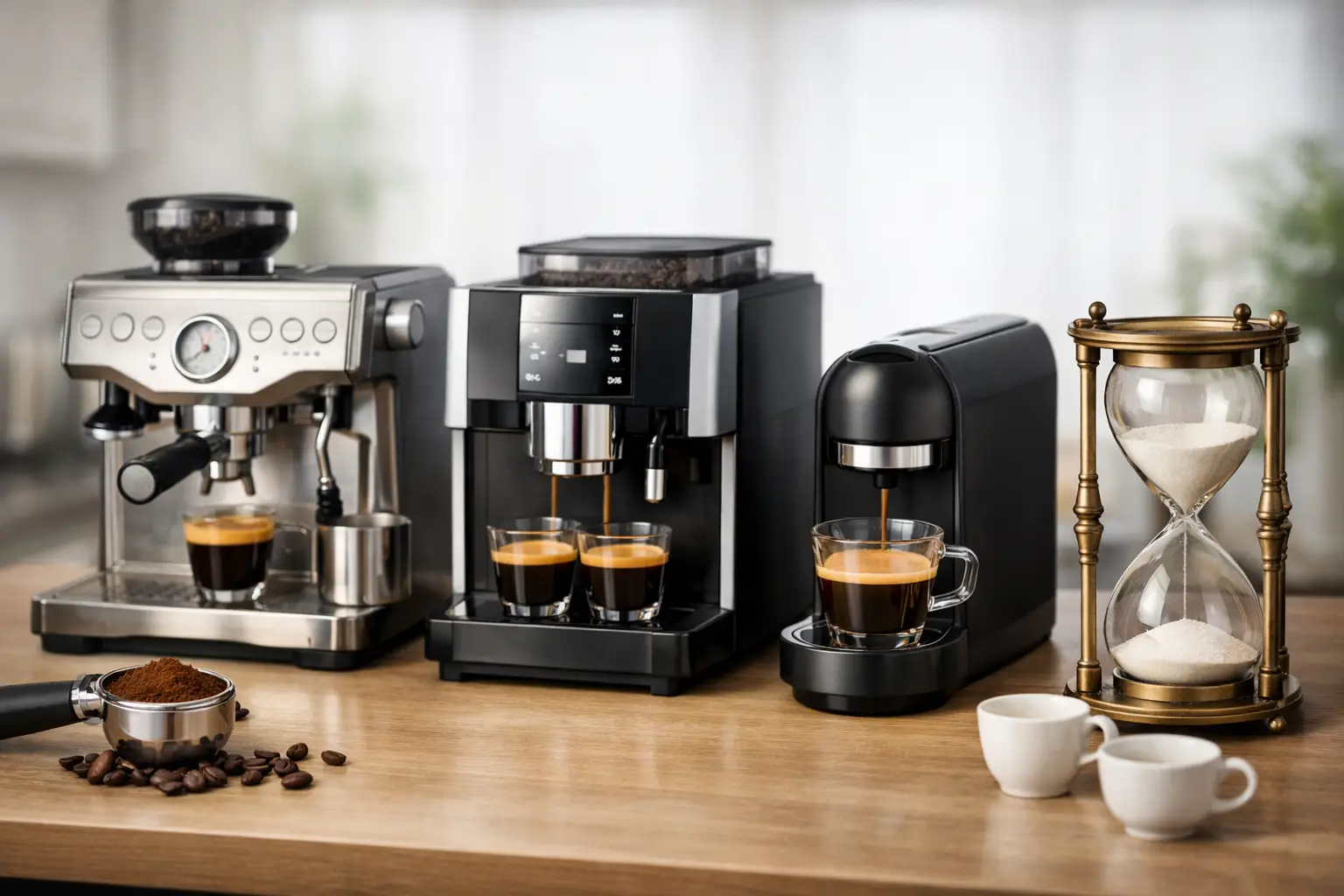
A machine that pulls beautiful shots for six months is easy to find. A machine that still pulls them after seven years of hard mornings is where the real buying decision starts. If you’re asking which espresso machine lasts longest, the answer is less about brand hype and more about machine class, internal parts, and how repairable the system is once the honeymoon period ends.
For most serious home users, the longest-lasting espresso machines are prosumer semi-automatic models with metal internal components, a simple control layout, a respected parts network, and a design built to be serviced instead of replaced. That usually puts cheap super-automatics at the bottom of the durability stack and commercial-inspired dual boiler or heat exchanger machines near the top.
Which espresso machine lasts longest in real use?
If longevity is the priority, semi-automatic machines generally outlast super-automatic machines. Lever machines can last even longer in some cases, but they ask more from the user and are a niche fit. In practical terms, the machines that age best are the ones with fewer fragile moving parts, less proprietary electronics, and easy access to pumps, valves, gaskets, and heating components.
That matters because espresso machines do not usually die from one dramatic failure. They wear down through scale buildup, pump fatigue, leaking seals, stuck solenoids, cracked plastic fittings, and neglected maintenance. A durable machine is one that can absorb that wear and be restored without becoming a money pit.
A simple hierarchy helps. Entry-level thermoblock machines are convenient, but many are built with more plastic, tighter internal packaging, and limited serviceability. Midrange single-boiler machines can last well if maintained, especially proven designs with broad parts support. Prosumer heat exchanger and dual boiler machines tend to lead the field because they are built like equipment, not gadgets.
The machines that usually last the longest
The safest long-term bet is a prosumer semi-automatic from a manufacturer known for commercial lineage and parts availability. Think E61 group machines, rotary or quality vibratory pump designs, stainless steel frames, copper or stainless boilers, and standardized components technicians already know how to service.
These machines are not immortal. They are simply designed around an older, better idea of ownership. When a pressurestat, pump, or heating element fails, the machine is often worth repairing. That is a major difference from lower-cost units where one expensive repair can exceed the machine’s remaining value.
Single-boiler machines can also deliver strong longevity if the design is mature and the owner is disciplined about descaling, backflushing, and gasket replacement. A well-kept single boiler from a reputable manufacturer may outlive a more complex machine that gets neglected.
Super-automatics sit in a different category. They are efficient and appealing for busy households, but they pack grinders, brew units, milk systems, sensors, and software into one chassis. More convenience means more failure points. A high-end super-automatic may perform well for years, but on pure lifespan, especially cost-effective lifespan, they usually lose to simpler semi-automatic machines.
Build quality matters more than the badge
Shoppers often look for a brand winner, but longevity usually starts with the frame and internals. Metal over plastic is the obvious rule, but the deeper issue is heat stability and component stress over time.
Boiler material matters. Brass, stainless steel, and copper all have strong use cases. What you want to avoid is a machine that feels disposable inside, even if the exterior looks premium. A polished shell can hide plastic connectors, thin tubing, and cramped layouts that make future repairs harder.
The group head is another clue. Heavier, proven group designs tend to age better because they manage heat more predictably and are supported by a large service ecosystem. Machines built around standardized parts also tend to have a longer useful life because replacement parts remain available longer.
Electronics are a trade-off. PID temperature control is useful and often worth having. Complex touchscreens, app integrations, and proprietary interfaces are less compelling if your core question is lifespan. The more custom electronics a machine depends on, the more careful you should be about long-term service support.
Boiler type and lifespan
Thermoblock machines heat quickly and suit casual use, but they are usually not the first choice for maximum longevity. They can be perfectly fine for lighter households, yet they are often built to a price and not to a decades-long service model.
Single-boiler machines strike a strong balance. Fewer components can mean fewer things to break. The trade-off is workflow speed, especially if you make multiple milk drinks back to back.
Heat exchanger and dual boiler machines often win the durability conversation at the higher end because they are designed for repeated use and thermal consistency. They cost more up front and can cost more to maintain, but if the machine is well built, the chassis and core systems are made for serious duty.
The biggest predictor of lifespan is not the machine
Water quality usually decides whether an espresso machine becomes a ten-year tool or a three-year regret. Hard water quietly destroys boilers, valves, and internal pathways. If you do nothing else right, get the water right.
That means using appropriately filtered water, not just whatever comes from the tap. It also means understanding that distilled water is not a universal solution. Espresso machines need water chemistry within a sensible range, both for flavor and for protecting internal components.
Maintenance is the second major variable. Backflushing, cleaning the group head, replacing gaskets, descaling when appropriate, and keeping the steam wand spotless are not optional rituals for obsessive hobbyists. They are basic system care. Skip them, and even a premium machine will age fast.
Usage pattern matters too. A machine used consistently and maintained properly can fare better than one that sits idle for long stretches, building stale residue and drying out seals. Espresso equipment likes regular, competent use.
What to avoid if you want a machine that lasts
Cheap all-in-one appeal usually comes at a cost. Built-in grinders are convenient, but integrated systems can complicate repairs. If the grinder fails, your espresso machine may be partly sidelined. Separate components often create a longer-lasting setup because each tool can be serviced or replaced independently.
Be cautious with machines that rely heavily on proprietary parts or closed service networks. A machine is only durable if someone can still repair it in year six. Availability of parts, technician familiarity, and an active owner community all matter.
You should also be skeptical of feature-stacked machines aimed at casual buyers who want cafe output with zero learning curve. Convenience sells. Longevity is usually found in simpler systems with fewer hidden mechanisms.
Best long-life choice by buyer type
If you want the longest possible service life and are willing to learn espresso properly, buy a serviceable semi-automatic prosumer machine. This is the strongest answer for advanced home users, serious coffee drinkers, and anyone building a durable kitchen setup instead of chasing novelty.
If your budget is tighter, a respected single-boiler semi-automatic is often the smartest value play. You give up some workflow speed, but you can still get many years of use from a proven design.
If convenience is non-negotiable, a premium super-automatic can still make sense. Just go in with the right expectation. You are buying convenience first, not maximum lifespan. That is a valid trade-off, but it is still a trade-off.
A quick reality check on lever machines
Manual lever machines can last an exceptionally long time because they are mechanically simple and often beautifully built. Some owners keep them running for decades. But they demand technique, patience, and a taste for ritual. For most readers asking a practical buying question, a serviceable semi-automatic is the more realistic long-term answer.
So which espresso machine lasts longest?
The longest-lasting espresso machine is usually a repairable semi-automatic prosumer model with strong metal construction, standardized parts, and a track record for service support. In plain terms, buy the machine that a technician expects to fix, not the machine a retailer expects you to replace.
That does not mean everyone needs a heavy dual boiler machine. It means you should buy for ownership horizon, not just first-week excitement. A good espresso setup works like any serious kitchen system. Durable hardware, clean inputs, routine maintenance, and parts access beat flashy features every time.
If you want the smartest long-game move, spend less energy comparing glossy spec sheets and more time looking at internal build quality, water requirements, service manuals, and repair culture. The machine that lasts longest is usually the one designed to be kept.