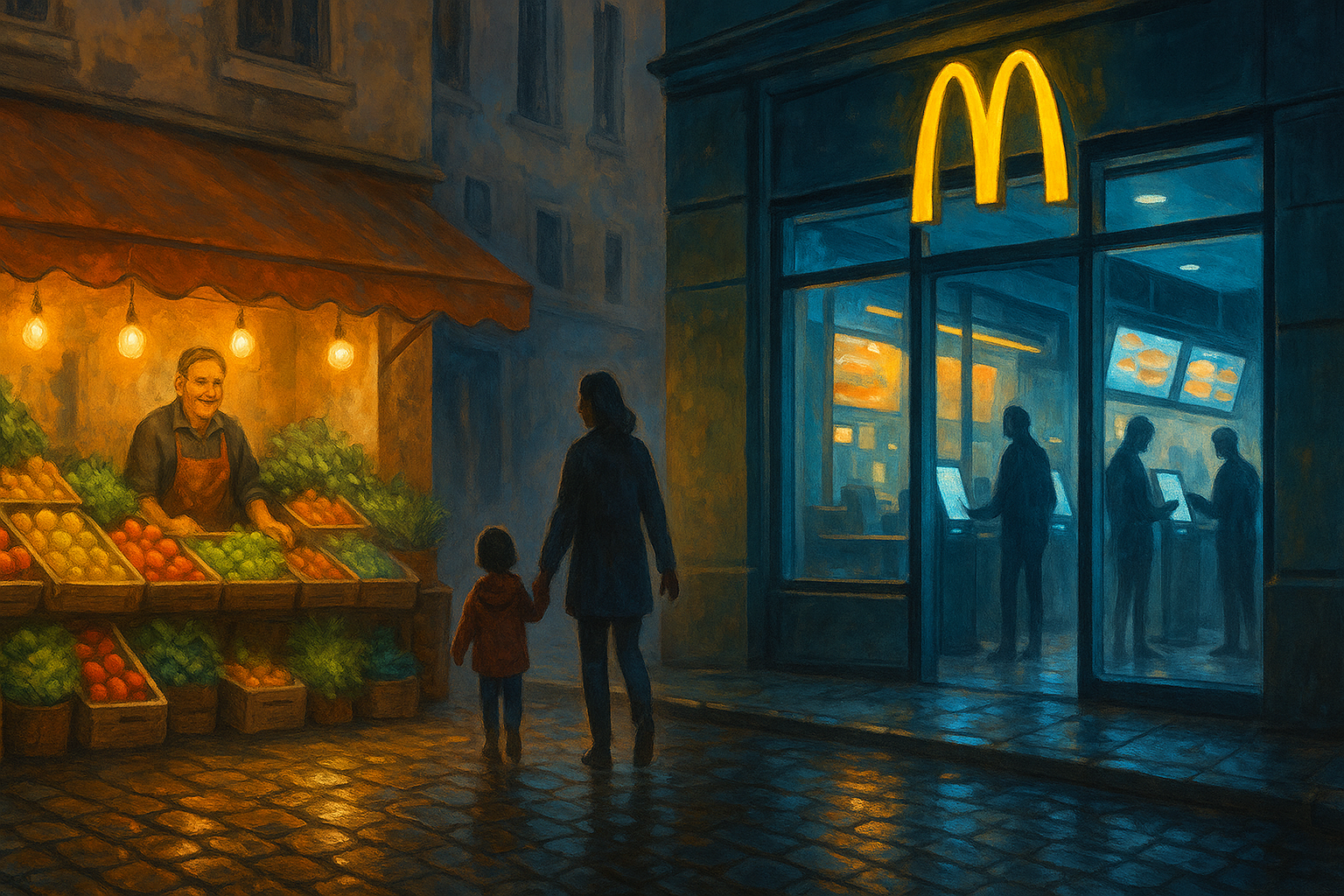
Step into a corner shop in Mexico City today and you’ll notice it’s not just selling snacks. It’s handling your bills, your bus pass, even your morning coffee. That’s Oxxo for you: more than 22,000 stores turning daily errands into a seamless network.
Now picture something similar in Paris or Berlin. It’s not far-fetched. Europe, for all its talk of exceptionalism and strong social models, is on a familiar path—one I’ve already seen in places like Dubai and Mexico.
Multinational chains aren’t just dropping in to sell burgers or lattes. They’re rebuilding the bones of everyday life: how we eat, how we work, and even how we pay. And over the next two or three decades, those shifts could pull Europe closer to the American way than most want to admit.
Mexico’s Lesson: How Multinationals Reshape Culture
When I first moved to Mexico, the streets buzzed with tienditas—tiny family-run shops where you’d grab tortillas and chat with the owner. They were the heartbeat of communities.
Fast forward a generation, and chains like Oxxo and Walmart have flipped the script. Oxxo alone reached 22,700 stores by 2023, becoming a hub for payments, remittances, and even small loans. Traditional markets still exist, but the shift is undeniable. In Mexico City, supermarket density now correlates with changing diets: quicker, cheaper calories from processed foods replacing the neighborhood staples.
Dubai’s malls did something similar—turning desert outposts into retail ecosystems. Europe isn’t immune. McDonald’s added hundreds of outlets across the continent in 2023, bringing its European total close to 10,000. France has 1,600 alone, Germany over 1,300. And it’s not just burgers. The European fast-food market hit nearly $220 billion in 2024, projected to grow steadily through 2033.
These aren’t isolated outlets. They reshape labor (gig workers on bikes, part-time shifts around classes), habits (kids growing up with delivery apps instead of open-air markets), and consumer expectations.
And the numbers show it: top retailers like Aldi and Lidl now command up to 70% of grocery sales in some countries. Private-label products account for nearly 40% of total grocery value. Efficient? Yes. But suppliers get squeezed, local growers lose leverage, and diets tilt toward the standardized.
Europe resists with its food culture—Provençal markets, Berlin currywurst stands—but resilience is not immunity. Scale wins over time, especially when Brussels smooths the path.
Brussels and Multinational Influence: The Policy Back Door
The EU single market is a dream for scaling: one set of rules, one massive playground. But behind the regulations is a professionalized lobbying machine. Around 30,000 lobbyists work Brussels, with tech and retail giants spending over €15 million annually to shape directives.
It’s not secret backroom deals—it’s polished, declared, and logged. Yet the effect cascades. National laws bend toward easier entry for multinationals.
Healthcare is the clearest example. Europe’s pride remains universal coverage, but the strain shows. The WHO warns of a 1.8 million worker shortfall by 2030. In some countries, waiting lists grow while rural areas hollow out. Private insurance is expanding at the edges: in Germany, about 11% of the population carried private health insurance in 2023, up from 9% a decade earlier. France, too, has seen rising premiums and supplementary plans filling the gaps.
It’s not U.S.-style chaos yet, but the tilt is there. Universal access remains, but complementary insurance is becoming the norm. Over 30 years, that layer could reshape healthcare delivery entirely.
The Demographic and Housing Squeeze: Why Families Are the Pivot
Look at the numbers. EU fertility fell to 1.38 births per woman in 2023, down from 1.46 the year before—far below replacement level. In Malta, it’s as low as 1.06.
At the same time, housing costs bite hard. Eleven percent of Europeans spend more than 40% of their income on rent or mortgages. In Greece it’s 25%, in Denmark 23%. Urban rents outpace wages, making family formation harder. Couples delay or skip children altogether.
Governments face the math: fewer workers, aging populations, and tighter budgets. The solution? Open the doors to private capital. Chains handle elder care, delivery networks fill gaps, and supplemental health plans spread. What starts as convenience becomes infrastructure.
In Mexico, people began trusting Oxxo more than banks for basic services. In Europe, as Starbucks apps track your order and McDelivery becomes routine, the cultural rhythm shifts the same way.
Why Critics Miss It
Some will argue Europe is too diverse to ever be “Americanized.” And it’s true: cultures in Lisbon, Warsaw, and Berlin move at different speeds. But shared pressures—aging populations, housing crises, EU-wide regulations—create common ground for corporate scale. Diversity slows the pace; it doesn’t stop the trajectory.
Others will point to protections: labor laws, universal healthcare, and food traditions. And they matter. But protections flex under strain. Local food culture is real, but coexists with expansion. Welfare benefits are real, but suppliers and workers carry the hidden cost.
Critics debate today’s snapshots. I’m talking about trajectories.
Why Lived Experience Sees What Credentials Miss
This isn’t theory for me. I’ve lived in Dubai, Mexico, and Europe. I’ve seen the patterns play out.
When I raised this perspective in a recent online debate, credentialed professionals were quick to dismiss it: “You obviously don’t know much.” That’s the reflex of status, not analysis.
Degrees sharpen tools, but they can also blind people to the system they’re inside—academics’ silo EU policy from global business. I connect them because I’ve lived them.
Looking Ahead: The Future of Europe’s Culture Shift
Change doesn’t scream in anecdotes; it whispers in trends.
Europe’s public models are strong today, but the fractures—demographic, fiscal, infrastructural—are widening. Multinationals are already building the networks that will outlast resistance. Over the next 30–50 years, Europe’s street-level reality could look more like Mexico’s: efficient, standardized, and corporate-driven.
The question isn’t whether Europe changes. It’s whether Europe chooses the direction or just rides along.
Next time you pass a new chain on your street, ask yourself: Is this convenience, or the future?